Sell garage: Valuation, condition, tenants & sale – 18 steps
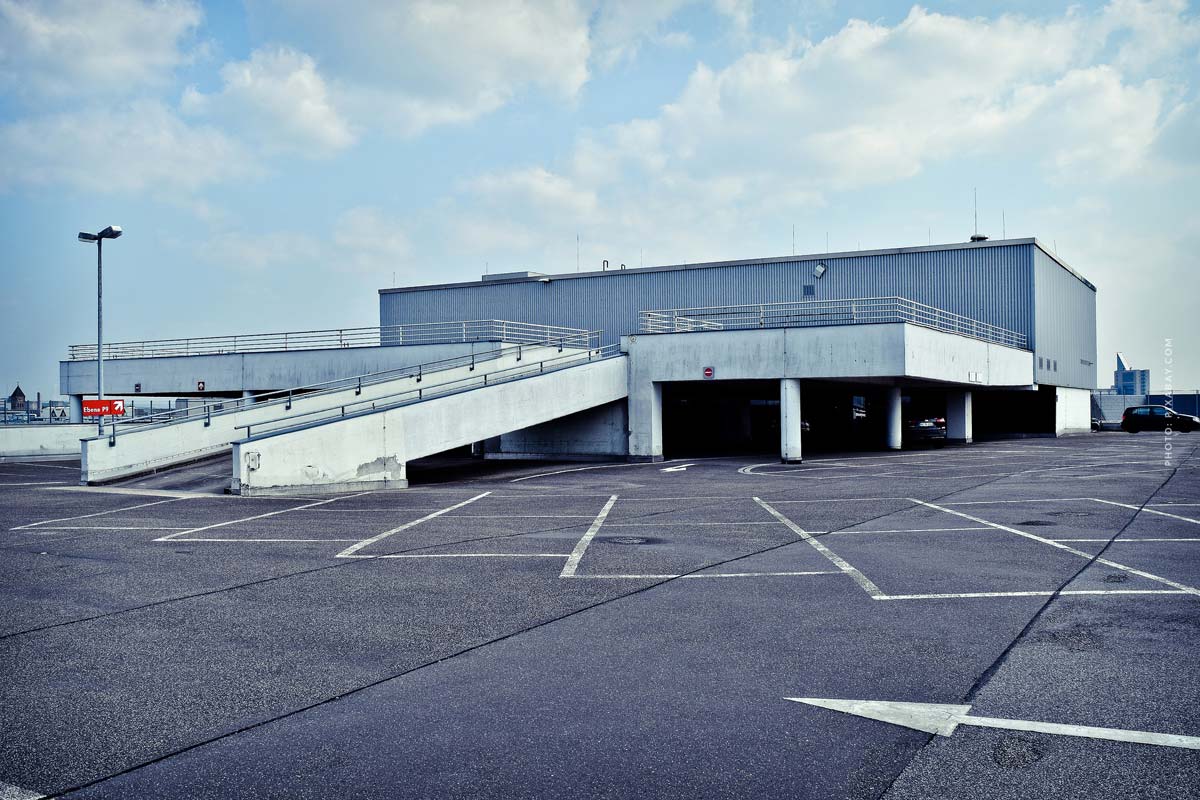
Selling a parking garage – Valuation, condition, real estate agent and tenant lists: What is important when selling a parking garage? Who buys a parking garage? Who even buys parking garages as part of a portfolio? This guide is not for real estate professionals, but for beginners – especially those who are selling for the first time (example: inheritance): How much is a parking garage worth? How does the sale process work? What is the typical multiplier? Here you will get a deep insight into valuation methods, buyer profiles, off-market structures and taxes. Tip! You want to sell “only” a single parking space? Then read more here: Selling a parking space.
Selling a parking garage: Valuation to real estate agent
Let’s start with the most important question for first-time sellers: What is your parking garage worth?
Unlike residential real estate, a parking garage is almost exclusively valued using the income capitalization approach – not by square meter prices or asset value. Buyers are investors, and investors think in terms of return. Specifically, this means: Annual net rent × purchase price factor = market value (simplified).
Three factors ultimately determine the multiplier and thus your selling price:
- Location (macro, meso, micro)
- Condition of the parking garage (year of construction, backlog of renovations)
- Tenant/occupancy structure (long-term, short-term, vacancy)
Secondary value drivers include the management contract, e-charging infrastructure, advertising space marketing, and development potential (e.g., expansion or re-use).

Location of the parking garage: Perspective
Berlin, Hamburg, Munich, Cologne, Dusseldorf, Frankfurt and throughout Germany – the better the location, the easier the rental for short- and long-term parkers. The vacancy rate is the key KPI for investors, which is why every valuation starts with a location analysis.
Three Location Levels for Valuation
- Macro – City: Population, purchasing power, commuter rate, public transport density
- Meso – Neighborhood: Frequency, competing offers, parking regulations, resident parking
- Micro – Street/Street Number: Visibility, access, truck suitability, connection to magnets (train station, clinic, stadium, trade fair, airport, shopping center)
Multiplier by Location – Orientation Values
The following ranges are common in the market (Purchase price factor = purchase price ÷ annual net rent):
| Location category | Example location | Multiplicator | Gross initial yield |
|---|---|---|---|
| A-location city center | Munich City, Frankfurt Station | 18 – 22 | 4.5 – 5.5 % |
| B-location city center | Cologne South, Hamburg Eimsbüttel | 14 – 17 | 5.8 – 7.1 % |
| C-location / medium-sized city | Münster, Karlsruhe | 11 – 13 | 7.7 – 9.0 % |
| Periphery / D-location | Small / outer cities | 8 – 10 | 10 – 12.5 % |
| Special object airport | FRA, MUC, DUS | 16 – 20 | 5.0 – 6.3 % |
Every increase in the multiplier by one point corresponds to a purchase price difference of 300,000 euros when the annual net rent is 300,000 euros. This is where the real negotiation leverage lies.
More about the calculation: Rental return and purchase price factor.
Condition of the parking garage: Renovation
Few buyers want to put a lot of work into the property – they want immediate return. Those who are willing to undertake renovation work get a discount on the purchase price in return. After location, the structural condition is therefore the next most important factor.
For relatively new parking garages, this point is less important. For objects 25 years old and older, it becomes decisive.
Typical defects and renovation items
- Carbonation of the concrete (due to carbon dioxide and sulfur dioxide)
- Floor coatings (chloride-resistant, OS 11)
- Concrete repair of load-bearing structural elements
- Crack injection and crack sealing
- Roof waterproofing against dripping water
- Fire protection (F90, sprinkler system, smoke extraction RWA)
- Ventilation (CO alarm system)
- Electrical installation, lighting (LED mandatory)
- E-charging infrastructure according to GEIG (Building Electromobility Infrastructure Act)
Maintenance costs for parking garages vary significantly – depending on the condition, between 500 euros and 8,000 euros per parking space.
Renovation example: Old parking garage with 100 parking spaces
Let’s say the parking garage is 40 to 50 years old and at the end of its life cycle. Renovation and retrofitting costs are unavoidable. With 100 parking spaces, you can expect around 6,000 euros per space as a rule of thumb – so about 600,000 euros. With a full renovation, this can multiply:
- Strengthening of the garage base: approx. 1.4 million euros
- Concrete repair of load-bearing structural elements: approx. 1.1 million euros
- Roof waterproofing / drip water protection: approx. 0.5 million euros
- Fire protection, RWA, ventilation: approx. 0.3 – 0.6 million euros
- Electrical installation, LED, Wallboxes: approx. 0.2 – 0.5 million Euro
Source: DZ Online. In total, it quickly exceeds 3.5 million Euro – a risk that every buyer includes in the purchase price.
The GEIG obligation (Wallbox pre-installation in non-residential buildings) is now a hard purchase price factor. Parking garages without pre-installation are evaluated by investors with a discount, because the retrofitting per parking space quickly costs 2,500 to 5,000 Euro. Conversely: whoever has already installed a charging management system with billing can increase the rent by 15 – 30 % and thus the multiplier.



Tenants (long-term/short-term) and vacancy
Existing rental agreements are the second most important lever in the sale. Especially when the parking garage is not located in a lively inner city or residential area, but at special locations such as exhibition facilities, airports, clinics or train stations, the tenant structure decides the multiplier.
Which tenant structure investors prefer
- Long-term tenants with long-term contracts – residents, commuters, hotel guests. Ideal case: 70 – 90 % occupancy calculated over 24/7.
- Short-term parkers – higher hourly revenues, higher volatility.
- Commercial long-term tenants – car rental companies, car sharing, delivery services. Most stable cash flow.
- Advertising spaces – entrance, pylon, façade, gate advertising. In A-locations 20,000 – 80,000 Euro p. a. additional revenue.
Tenant list – what buyers want to see
- Number of long-term parkers with remaining contract duration
- Average hourly occupancy (peak / off-peak)
- Daily revenue and seasonality
- Vacancy rate and WALT (Weighted Average Lease Term)
- Indexation of lease contracts (value protection clauses)
Example calculation: Selling price of parking garage with 100 parking spaces
To make the valuation model tangible, here is a concrete scenario:
| Position | B-Lage Mittelstadt | A-Layer Big City |
|---|---|---|
| Parking spaces | 100 | 100 |
| Rent per parking space / month | 110 € | 240 € |
| Annual net rent (including advertising) | 148.000 € | 312.000 € |
| Multiplicator | 15 | 20 |
| Gross traffic value | 2,22 Mio. € | 6,24 Mio. € |
| Deduction for renovation backlog | – 0,4 Mio. € | – 0,1 Mio. € |
| Realistic selling price | ~ 1,82 Mio. € | ~ 6,14 Mio. € |
The difference between B- and A-location is therefore not in the parking spaces – but in the factor of 3,4 on the selling price.
Who buys parking garages? Buyer profiles
Unlike with residential real estate, you are not looking for a private buyer, but rather an institutional or semi-institutional investor. Insider knowledge that determines the sales channel:
- Specialized funds and real estate AIFs – buy from about 5 million euros in volume, often part of the portfolio
- Family Offices – medium volumes, long-term holders, inflation protection
- Parking garage operators – APCOA, Q-Park, Contipark – buy strategically, often sale-and-lease-back
- Project developers – buy for redevelopment (residential, logistics, mixed-use), pay land value + premium
- Wealthy private investors – small parking garages up to 3 million euros
- Communities / municipal utilities – for strategic inner-city locations
Those who advertise as first sellers on a standard portal will reach at most groups 5 and 6. The real multipliers, however, are in groups 1 to 4 – and there the sale is done off-market.
Off-Market Sale: Why discreet is better paid
Most garage parking spaces are not marketed through real estate portals, but off-market – through personal investor networks of experienced real estate agents. Three reasons:
- Discretion – tenants, operators, and employees should not be unsettled
- Bidding process possible – several curated investors can bid simultaneously
- No listing stigma – objects that have been publicly listed for months are considered “burned”
For you, this means: The most important asset of the real estate agent is not the website, but the investor database.
More on this: Off-Market Strategy.
Sale directly to me? Single parking space / entire garage
I regularly receive inquiries asking if I would buy a single parking space. Almost always the answer is no – outside of the metropolitan areas Berlin, Hamburg, Cologne, Dusseldorf, Frankfurt or Munich.
My tip, if you want to sell just a single parking space: Contact your co-owners. You can get the address list from the WEG management. Put up a notice. If the parking space is well rented out, it is an excellent, low-maintenance asset – especially during inflationary periods – keeping it might be the better decision.
Technical Due Diligence: What Buyers Check
Before an investor submits a letter of intent (LOI), they conduct a technical and legal review. Prepare these documents early – it speeds up the deal process.

Sell villa in Meerbusch: Sought-after villa location near Düsseldorf

Sell a villa in Düsseldorf: Prices, real estate agent, checklist + buyer waiting list
Sell a villa in Düsseldorf: Prices, real estate agent, checklist + buyer waiting list

Sell a villa in Berlin: List, Rating, Prices, Real Estate Agent, Mistakes, Experiences

Villa for sale Hamburg: List, Rating, Prices, Real Estate Agent, Experiences

Sell a villa in Cologne: List, Rating, Prices, Real Estate Agent, Mistakes, Experiences