When is an energy certificate required when selling a house?
With an energy performance certificate, one possesses a document that evaluates a building’s energy efficiency. It not only belongs to the most important documents and papers when selling real estate, the issuance and use of an energy performance certificate is also regulated in the Energy Saving Ordinance. But exactly when is such a certificate needed when selling a house?
When is there an obligation to present an energy performance certificate?
Spätestens bei the viewing must property owners who want to sell their property present an energy certificate. When advertising, central data such as final energy demand or consumption in kilowatt-hours per square meter (kWh/m²) and year, the main energy source of the heating system, and the year of construction of the building must be stated. Caution is advised if information is missing, as fines of up to 14,000 euros may apply. The certificate or a copy must be handed over to the new owner upon completion of the purchase agreement. There is only one exception to note, these are buildings with less than 50 m² of usable area and listed buildings.
Summarized:
- Energy certificate required when selling
- Required information when advertising: final energy demand/consumption (kWh/m²/year), main energy source, year of construction
- Fines up to 14,000 Euro for missing information
- ID/copy must be handed over to the new owner upon purchase
- Exceptions: buildings under 50 m² usable area, listed buildings

Which energy efficiency classes are included in an energy certificate?
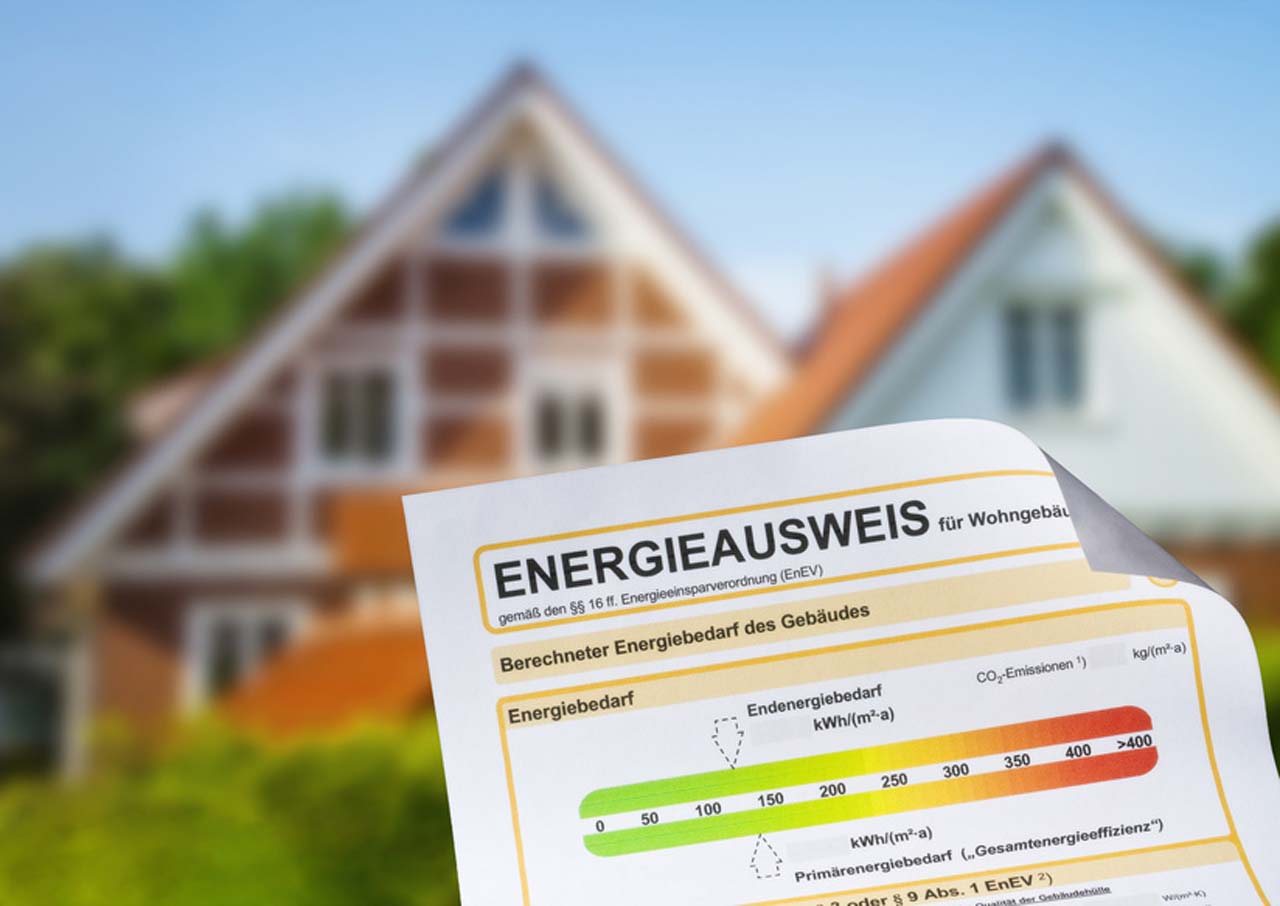
Energy certificates for residential buildings issued after May 1st, 2014 are assigned an energy efficiency class from “A+” to “H”. This classification should also be stated in property advertisements. This allows potential buyers to get a clear impression of the building’s energy efficiency at a glance.
“A+” classified buildings have an end energy demand or consumption of less than 30 kWh/m² per year. The efficiency class “H” refers to residential buildings with a demand or consumption higher than 250 kWh/m² per year. The classification is combined with the band scale already known from the old energy certificate, which visually represents the energy efficiency in colors from green (very efficient) through yellow (moderately efficient) to orange and red (not very efficient).
What are the differences in the energy certificate?
There is a distinction between the consumption certificate and the demand certificate. The consumption certificate is based on the actual energy consumption, such as gas or heating oil. The demand certificate calculates a heat balance of the building. The expected energy consumption for heat losses of the building components, the building ventilation, and the operation of the building services is calculated and compared to a reference building.

What is an energy certificate and how do you read it?
Examples, costs, when which one

How much is an apartment building worth? 5 value factors for apartment buildings

Real Estate Statistics: House, Apartment, Investment & Real Estate Prices in Germany

Costs and benefits of a building expert: An investment that pays off?

Energy certificate for sale: compulsory? Content, structure, costs - quickly explained

Buy a villa in Berlin: Villas as an Investment - Process, Costs, Off Market & Co.

Own use vs. capital investment Difference: credit, costs, tax benefits