Learn Currency Trading: Forex, Leverage & Tax
Currency trading — also known as forex trading or FX trading — is the largest and most liquid financial market in the world: more than 7.5 trillion US dollars change hands every day, more than on all stock exchanges combined. Unlike ETFs and stocks, currency trading takes place around the clock — 24 hours a day, 5 days a week, decentralized, with no classic exchange. Anyone looking to get started needs discipline, risk management, and a clear understanding of spreads, leverage, and taxes. In this guide, you’ll learn step by step: How does forex work? What costs and risks are involved? How are profits taxed in Germany? And why real estate as a capital investment is the calmer counterpart to hectic FX trading.
Currency Trading Explained Simply: What Is Forex?
The foreign exchange market (English: Foreign Exchange Market, Forex or FX for short) is a decentralized global marketplace where national currencies are traded against one another. Unlike a stock exchange, there is no central trading venue — trading takes place electronically via the interbank market (OTC, over-the-counter) between banks, brokers, hedge funds, corporations, and retail investors.
Forex = Foreign Exchange = buying one currency in exchange for another
Unlike cryptocurrencies, these are fiat currencies — money issued by the state, whose value is regulated by central banks (ECB, Fed, BoJ) and governments. Retail investors mostly trade via trading apps or online brokers.
Who Trades on the Foreign Exchange Market?
- Central banks: manage monetary policy, foreign exchange reserves
- Commercial banks: largest trading volume, interbank market
- Multinational corporations: hedging export/import transactions
- Hedge funds & asset managers: speculating on macro trends
- Retail investors: approx. 5–6% of volume, trending upward

Currency Trading Explained: A US Trip Example
For beginners, getting started with forex trading / currency trading is relatively easy. You can get started without much capital, even via an app.
Many people know about the stock market, shares, and ETFs. But how often have you heard about currency trading? Very few people have gained experience in this particular field. How does trading between different currencies work, from the euro (EU) to the dollar (USA) — and how do you make money with it?
If you’ve ever traveled to the USA, you’ve participated in currency trading without even knowing it!
Every currency exchange is a forex trade. You buy at a certain rate and sell at a certain rate. The difference is then profit or loss.
That’s it. That’s how “simple” currency trading works.
Supply and demand
To get straight into it, you’ll now learn how, on your next trip, you can turn 10,000 euros into 10,909 euros after one month!
Exchange rate gain (30 days): 909 euros
How does that work?
Let’s start with a small thought experiment.
USD/EUR Exchange Rate Today: Real-Time
Further up-to-date charts follow later.

Example: Currency Exchange on a US Business Trip
You’re traveling to the USA. So you need to exchange your euros for dollars. This means you’re participating in the global foreign exchange market.
You take 1) the money you need for the trip, and 2) an extra 10,000 euros.
You exchange the 10,000 euros at the current exchange rate.
EUR/USD exchange rate (January 8): 1.20
What does exchange rate mean? The exchange rate indicates how much of one currency you have to pay for another. An exchange rate (EUR/USD) of 1.20 means that in exchange for 1 euro, you receive 1.20 dollars.
1.00 euro = 1.20 dollars
Accordingly, you exchange at this rate and receive 12,000 dollars. So for 10,000 euros, you get 12,000 US dollars.
10,000 euros = 12,000 dollars
One month later, on February 8, you travel back to Germany. The EUR/USD exchange rate is now at 1.10. This means the euro has become weaker. Accordingly, you now get more euros back.
For your 12,000 US dollars, you now get a full 10,909 euros back in exchange, one month later.
+909 euros profit
You just made a profit of 909 euros on the side. That would already cover your next round-trip flight to the USA. That’s how currency trading works, explained simply.
Currency Trading in Practice: The US Trip Example
If you’ve ever traveled to the USA and exchanged euros for dollars — congratulations, you’ve already participated in the foreign exchange market. Every currency exchange is a forex transaction: you buy a currency at one rate and sell it later at another. The difference is your profit or loss.
Principle: supply and demand determine the exchange rate
Calculation Example: 10,000 Euros on a US Trip
You fly to the USA and bring an extra 10,000 euros on top of your travel budget, which you exchange for dollars. The exchange rate is EUR/USD = 1.20 — meaning: for 1 euro, you get 1.20 dollars.
- Outbound exchange: €10,000 × 1.20 = USD 12,000
- One month later: the rate falls to EUR/USD = 1.10 (the euro has weakened)
- Return exchange: USD 12,000 ÷ 1.10 = €10,909
- Theoretical profit: +€909
Reality Check: What the Example Doesn’t Tell You
In practice, it’s not that simple. When exchanging cash at a currency exchange bureau or the airport, spreads (the difference between the buy and sell rate) are often 2–4%. A realistic calculation looks like this:
| Item | Exchange Bureau | Forex Broker (Spot) |
|---|---|---|
| Spread | approx. 3.0% | approx. 0.01% (1 pip) |
| Exchange €10,000 → USD | USD 11,640 | USD 11,999 |
| Return exchange at 1.10 | €10,273 (after spread) | €10,907 |
| Real profit | +€273 | +€907 |
Lesson: the beginner’s biggest enemy isn’t the market, it’s transaction costs. Retail investors who trade forex seriously use regulated brokers with tight spreads — not the currency exchange bureau at the airport.
Exchange Rate Today: Example
Here’s the current EUR/USD rate once again:


Understanding Exchange Rates: Pairs, Pips, and Notation
Trading in Pairs — Definition
Currencies are always traded in pairs. The first code is the base currency, the second is the quote currency:
- EUR/USD = 1.1730 means: 1 euro costs 1.1730 US dollars
- USD/JPY = 148.50 means: 1 dollar costs 148.50 yen
Majors, Minors, Exotics — What Pairs Are There?
| Category | Examples | Spread (typical) | Liquidity |
|---|---|---|---|
| Majors | EUR/USD, USD/JPY, GBP/USD, USD/CHF | 0.1–1 pip | Very high |
| Minors / Crosses | EUR/GBP, EUR/JPY, GBP/JPY | 1–3 pips | High |
| Exotics | USD/TRY, EUR/ZAR, USD/MXN | 20–100 pips | Low, volatile |
Beginners should trade exclusively in majors: tight spreads, high liquidity, predictable volatility.
What Is a Pip?
A pip (percentage in point) is the smallest price unit of a currency pair — for most pairs, the fourth decimal place. Exception: for JPY pairs, it’s the second decimal place.
- EUR/USD moves from 1.1730 to 1.1731 → +1 pip
- USD/JPY moves from 148.50 to 148.51 → +1 pip
- Modern brokers quote fractional pips (5th decimal place, known as pipettes)
Lot Size: Standard, Mini, Micro
In forex, trading is done in lots — the standard size of a position:
- Standard lot: 100,000 units of the base currency (1 pip ≈ USD 10 for EUR/USD)
- Mini lot: 10,000 units (1 pip ≈ USD 1)
- Micro lot: 1,000 units (1 pip ≈ USD 0.10)
- Nano lot: 100 units (for demo / testing purposes)
Beginners should start exclusively with micro lots — this keeps the risk per trade manageable.
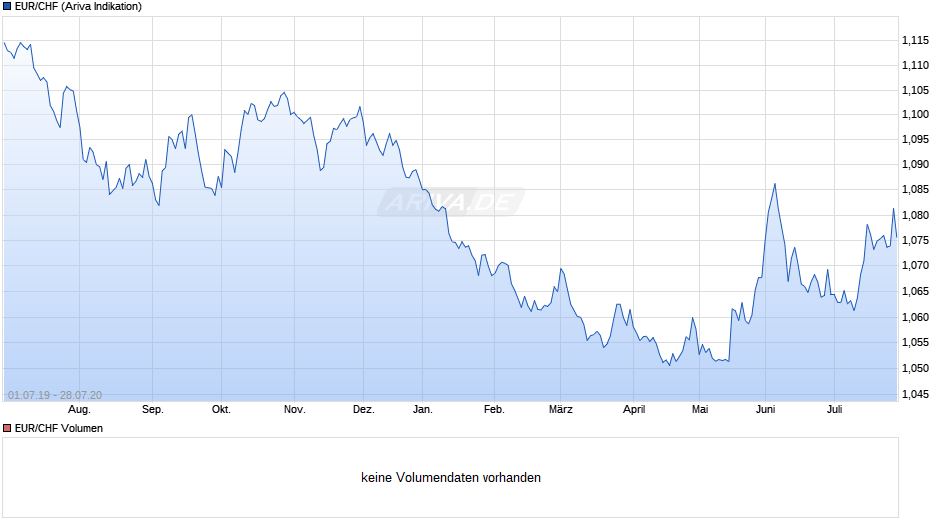
Currency Exchange Rate Today: Real-Time
Here you’ll find the most important currencies over a 12-month overview:
EUR / USD
USD/EUR
EUR / CHF
Leverage: Booster and Accelerant
The leverage effect is the most dangerous tool in forex trading. With a leverage ratio of 1:30, a stake of €1,000 moves a position of €30,000. Sounds tempting — but it can wipe out your account in seconds.
Leverage multiplies profits AND losses to the same degree
Leverage Examples with a €5,000 Stake
| Stake | Leverage | Position Size | Profit at +1% | Loss at -3% |
|---|---|---|---|---|
| €5,000 | 1:1 | €5,000 | +€50 | -€150 |
| €5,000 | 1:5 | €25,000 | +€250 | -€750 |
| €5,000 | 1:10 | €50,000 | +€500 | -€1,500 |
| €5,000 | 1:20 | €100,000 | +€1,000 | -€3,000 |
| €5,000 | 1:30 (EU max) | €150,000 | +€1,500 | -€4,500 (margin call) |
Note: At 1:30 leverage, a price move of just -3.3% against you is enough to liquidate your entire account. For major forex pairs, this can easily happen in a single day following a surprise central bank decision.
ESMA Leverage Limits for Retail Investors in the EU
Since the ESMA regulation, binding maximum leverage limits apply to retail investors (retail clients) in the EU:
- Major forex pairs: max. 1:30
- Minor forex pairs and gold: max. 1:20
- Other commodities and major indices: max. 1:10
- Share CFDs: max. 1:5
- Crypto CFDs: max. 1:2
- Negative balance protection: your account cannot go negative — mandatory for regulated EU brokers
Anyone who wants higher leverage must be classified as a professional client — which requires meeting high thresholds (wealth, professional experience, trading frequency) and forfeits the protection of negative balance protection.
The Real Costs of Forex Trading
Beginners massively underestimate costs. Forex brokers advertise “0% commission” — but the costs are hidden in the spread and the swap.
1. Spread (Difference Between Bid and Ask)
Example EUR/USD: bid 1.1729 / ask 1.1730 → spread = 1 pip
With a standard lot, 1 pip costs around USD 10
Anyone trading 10 times a day quickly pays USD 100 in spread alone
2. Commission
ECN/STP brokers offer spreads from 0.0 pips but charge a commission instead (typically USD 3–7 per lot round-turn). Often cheaper for day traders than spread-based brokers.
3. Swap / Rollover (Overnight Costs)
Anyone holding a position overnight pays or receives the interest rate differential between the currencies involved. For EUR/TRY, for example, negative swaps can be extreme — long positions here can incur costs of several percent per day.
4. Inactivity and Withdrawal Fees
Many brokers charge fees after 3–12 months without a trade. Withdrawals by bank transfer often cost €10–25. Check the fine print before opening an account.
Risk Management: The Most Important Discipline in Forex
According to the mandatory disclosures of CFD brokers (BaFin/ESMA disclaimers), more than 70–80% of retail investors lose money trading forex and CFDs. The main reason is lack of risk management.
The 1% Rule (Position Sizing)
Never risk more than 1% of your account balance per trade
Account: €10,000 → max. risk per trade: €100
With a stop-loss of 20 pips → max. position size: 0.5 lot (mini)
This way, you can survive even a series of 10 losing trades
Stop-Loss and Take-Profit
Stop-loss (SL): automatic sale at a defined loss threshold — mandatory for every trade
Take-profit (TP): automatic sale at a defined profit target
Risk-reward ratio (RRR): at least 1:2 — meaning twice as much profit potential as risk
Trailing stop: the stop moves along with price gains — locking in profit
What Moves the Forex Market? Key Price Drivers at a Glance
Unlike with an individual stock, there’s no single company balance sheet to analyze in the forex market — you’re weighing entire economies against one another. Accordingly, the range of factors that can move a rate is broad. Anyone who understands these price drivers will see why exchange rates sometimes move several percent within minutes — and why mortgage rates and currency rates often follow the same triggers.
Central Bank Policy and Interest Rate Decisions
By far the strongest price driver in forex is the monetary policy of the major central banks (ECB, Fed, BoJ, BoE). If a central bank raises its key interest rate, investments in that currency become more attractive to international capital — demand rises, and the exchange rate strengthens.
The interest rate differential between two currency areas is the single most important factor in currency trading
Key interest rate decisions: ECB and Fed meeting dates are firmly marked on every trader’s calendar
Meeting minutes: the wording of meeting minutes often moves rates more than the decision itself
Forward guidance: statements about future rate moves already affect the rate weeks in advance
Interest rate differential (carry): the basis of the carry trade — borrowing money in a low-interest currency and investing it in a high-interest currency
Economic Data and Business Cycle Indicators
Between central bank meetings, regularly published economic data move the markets — they show which direction an economy is heading and whether a rate change is becoming more likely.
| Indicator | Significance | Typical Market Reaction |
|---|---|---|
| Employment data (e.g., US non-farm payrolls) | Employment situation, pace of economic growth | Very high — often the single strongest event of the month |
| Inflation (CPI) | Price pressure, basis for interest rate decisions | High, especially when deviating from forecasts |
| Gross domestic product (GDP) | Overall economic growth | Medium, usually already largely priced in |
| Purchasing Managers’ Index (PMI) | Leading indicator for manufacturing and services | Medium to high |
| Trade balance | A country’s export/import ratio | Low to medium |
Inflation also has a dual effect: it not only directly influences a currency’s purchasing power, but also central banks’ interest rate decisions — and thereby indirectly the exchange rate as well.
Geopolitics, Crises, and Market Sentiment
Elections, trade conflicts, wars, or natural disasters trigger abrupt, hard-to-predict price movements. In such phases, a fixed market logic applies:
Safe-haven currencies: the Swiss franc, Japanese yen, and US dollar gain value in times of crisis — capital seeks safety
Risk-on / risk-off: in calm market phases (“risk-on”), capital flows into higher-yielding, riskier currencies; in times of uncertainty (“risk-off”), it flows back into safe havens
Positioning of large market participants: institutional hedging transactions can trigger bigger short-term moves than the actual news itself
In summary, three forces move the forex market simultaneously: monetary policy as the long-term trend-setter, economic data as short-term triggers, and market psychology as an amplifier during periods of stress.
Taxes on Currency Trading: What You Need to Know
In Germany, profits from currency trading are generally subject to capital gains tax (flat-rate withholding tax) — a flat 25% plus solidarity surcharge and, where applicable, church tax. Unlike cryptocurrencies, forex trading has no holding period after which profits become tax-free.
Tax-Free Allowance, Loss Offsetting, and Broker Reporting
- Saver’s lump-sum allowance: income up to the annual tax-free allowance remains tax-free — file an exemption order with your broker
- Loss offset pool: losses from forex transactions can be offset against gains from other capital investments
- Domestic broker: usually withholds and remits the tax automatically (withholding tax)
- Foreign broker: you must declare profits yourself in your tax return (Anlage KAP)
Private Trader or Commercial Trading?
Anyone who trades very frequently, with large amounts of capital, or with professional infrastructure can be classified by the tax authorities as a commercial trader — subject to trade tax instead of the flat withholding tax. Where exactly the line is drawn is a matter of interpretation in each individual case. That’s why you should never decide specific tax questions based on rules of thumb alone, but clarify them with a tax advisor before larger sums are at stake.
Conclusion: Is Currency Trading Worth It for Beginners? 5 Tips
Currency trading can be learned, but it’s not quick money: according to brokers’ mandatory disclosures, the majority of retail investors lose capital trading CFDs and forex. Anyone who still wants to get started should start small, prioritize risk management, and factor in costs realistically.
- Trade only with a regulated broker: BaFin/ESMA-regulated, with negative balance protection in place
- Start small: micro lots, maximum 1% risk per trade
- Always use a stop-loss: no position without a defined loss limit
- Plan costs realistically: calculate spread, commission, swap, and fees in advance
- Keep clean tax records: log trades and profits continuously, not just at tax return time
Anyone who shies away from the daily price swings and news risk of the forex market will find, in real estate as a capital investment, a deliberately slower, more predictable counterpart — no second-by-second ticking, but with tangible asset value instead.
FAQ: The Most Important Questions
Is forex trading dangerous? Without risk management, forex is one of the riskiest forms of investment, because leverage can empty an account within minutes. With a strict 1% rule and stop-loss orders, however, the risk can be controlled.
- Leverage multiplies losses
- Incalculable without a stop-loss
- Only with a BaFin-/EU-regulated broker
Is currency trading suitable for beginners? Getting started is technically easy, but the risk of loss without prior knowledge is high. Beginners should therefore first practice with a demo account and micro lots.
- Test a demo account first
- Use only micro lots
- Trade only major pairs
How are forex profits taxed in Germany? Profits are generally subject to the flat 25% capital gains tax, plus the solidarity surcharge and, where applicable, church tax. Unlike with cryptocurrencies, there is no holding period for currency trading.
- 25% flat withholding tax
- No holding period
- Use the saver’s lump-sum allowance
Can I trade currencies via an app? Yes, most brokers offer mobile apps with real-time rates and one-click trading. Still, it’s important that the provider is BaFin- or EU-regulated.
- Mobile broker apps are standard
- Real-time rates included
- Check regulation beforehand
What to Do About Inflation? Real Estate?
Property never protects 100% against risk, but it does provide stable protection against inflation. I’ll show you what that means in this guide on inflation protection (currency devaluation).
In the news today: USA over 5% inflation!
The great bogeyman of inflation is back. Inflation means “currency devaluation.” What, my money is worth less? A shock for everyone — but not for everyone in the same way. Property buyers with a mortgage actually welcome inflation! Money being worth less means goods cost more money to offset the devaluation. So owners get 1) more rent, with the same loan amount, and 2) while money loses value, the property retains its value.


Alex Fischer's "Financial Intelligence" Master Course: Coaching, Experience, Content

Real Estate Coaching: Alex Fischer, immocation, Anja Blodow & Co. - Courses

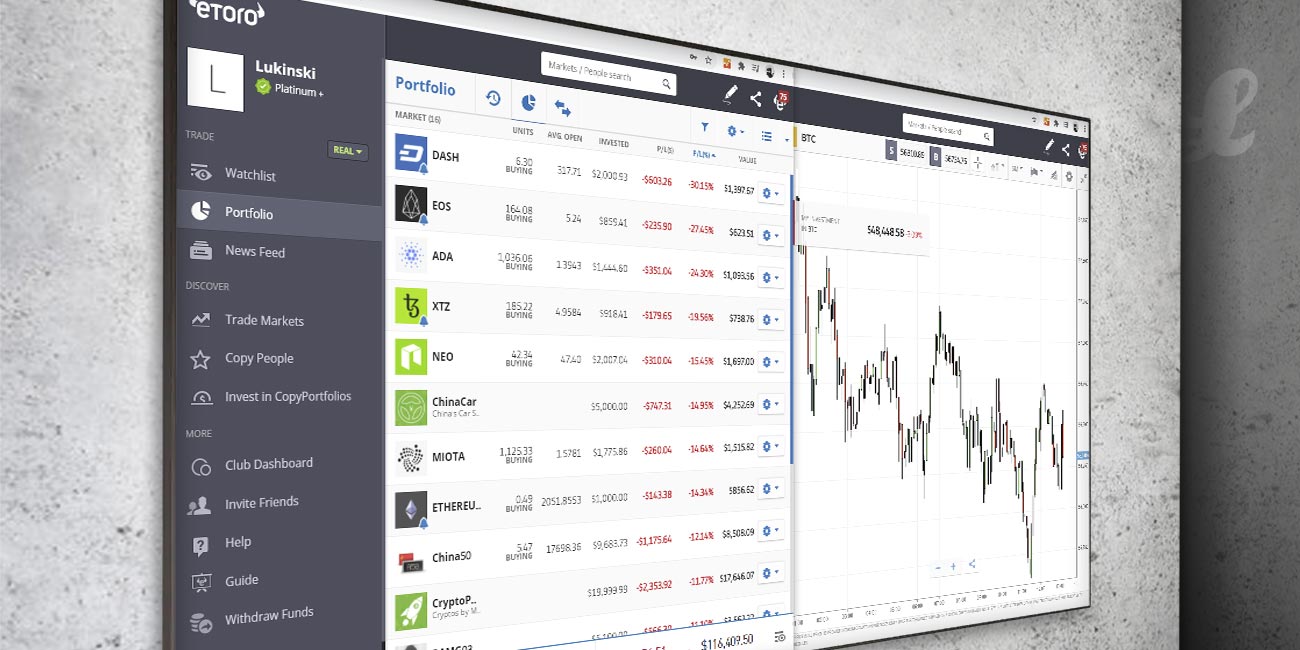
Trading Apps in comparison! Trade Republic, eToro, flatex + Scalable Capital useful? Test
Wallet: Digital wallet (App) for cryptocurrency, NFT & Co.

Alex Fischer Wiki: Real Estate, Taxes, Book, Courses, Seminars - Experiences
Wealth building: Real estate, stocks, cryptocurrency ... ?! Capital accumulation with 20, 30, 40 years - tips



Alex Fischer Masterclass: Coaching for real estate, career, taxes - what you need to know!
Alex Fischer's "Homeowner" Master Course: Coaching, Experience, Content

Alex Fischer's "Real Estate Investor" Master Course: Coaching, Experience, Contents

Alex Fischer's "Career Power" Master Course: Coaching, Experience, Content