Turnkey or Shell House: Which Is Cheaper? Costs, DIY Work and Risks Compared
Two quotes are on the table, one for the finished house and one for the shell house, and at first glance tens of thousands of euros lie between them. Whether that gap really ends up in your bank account depends on things that never show up as a price in any brochure: working hours, double housing costs, warranty, and how the bank values your own labour. This guide runs the numbers for both routes, points out the items that tend to be forgotten, and helps you judge which model fits your daily life. As a starting point, it is also worth a look at new builds of houses and apartments in general.
Two models, one house: what the terms really mean
With a shell house, the building company usually delivers the structure with roof, windows and exterior doors. The interior finishing is done by the owners themselves or handed to tradespeople they hire. Where the company's scope ends differs from provider to provider: some still supply the rough installation and screed, others stop at a watertight roof. That is why two shell house quotes can only be compared once the building specifications lie side by side.
Turnkey means: after acceptance you can move in, with floors, walls, sanitary fittings, electrics and heating. The term is not legally protected, however. Whether painting, floor coverings or landscaping are included is stated only in the contract. If you want to place the topic in a wider context, the overview of house types and the guide to buying a prefabricated house are a good basis. Solid construction versus prefabricated is a different question from the stage of completion, and the two can be combined.
This typically stays with the owners in a shell house:
- Painting and wallpapering
- Floor coverings and tiles
- Drywall and interior doors
- Parts of the sanitary installation
- Landscaping and driveway

The price comparison: where the shell house saves and where it does not
The price advantage comes almost entirely from saved labour costs. Material costs the same no matter who installs it. Where tradespeople bill many hours for painting, flooring or drywall, your own work therefore does relieve the budget. In practice a range of ten to 20 percent of the building costs is often quoted, provided everything runs smoothly and the work is done properly. That is a rule of thumb, not a promise.
A worked example with freely chosen, rounded assumptions (not market prices) shows how much the gap shrinks:
| Item | Turnkey | Shell house |
|---|---|---|
| Quoted price for the house | €400,000 | €320,000 |
| Material for interior finishing | included | €38,000 |
| Specialist firms for electrics, plumbing, heating | included | €30,000 |
| Tools, scaffolding, disposal | included | €4,000 |
| Subtotal | €400,000 | €392,000 |
| Your own working time | none | approx. 900 hours |
A gap of 80,000 euros in the quotes becomes 8,000 euros, or two percent, and for that roughly 900 hours of work are built into the house. One mistake in waterproofing or a delay of a few months, and the advantage is gone. It looks different when the owners are skilled with their hands and need specialist firms only for connections and sign-off: then much more of the gap is left. Rising material prices do not make the calculation easier, as the trend in new-build prices shows.
Hidden costs: what no house price includes
Whichever model you choose, the house price is not the total building cost. The plot, utility connections, incidental costs such as notary, land register, real estate transfer tax, soil survey and building permit, plus landscaping and the kitchen often come on top. How high the purchase incidental costs alone will be can be checked with a calculator. Some companies also list the foundation slab, basement or construction power separately. That is another reason to read the specification line by line.
A shell house adds items of its own. In Germany, helpers have to be registered with the statutory accident insurer of the construction industry, as a rule within one week of the start of construction, otherwise accident cover is missing in an emergency. Builder's liability insurance and construction insurance make sense anyway. Add scaffolding rental, skips for rubble, machinery, wrong purchases and rework. Anyone who sets no money aside for this ends up financing it later through the overdraft.
Tip: Put both quotes into one table, trade by trade, and note behind every line who pays for it. Empty cells are the items that will surprise you later.
A budget that reflects all these items is best built with a budget calculator for new builds before the first signature is made.

Time, nerves and the double burden
Doing the work yourself is a time project. If you want to save 30,000 euros and value your working hour at 25 to 40 euros, you need to plan for 750 to 1,200 hours. At 15 hours a week alongside a job, that is twelve to 18 months, and only if delivery times, drying times and the weather cooperate. An evening project quickly turns into a second job, and the family has the building site as a permanent guest.
During that time the rent for the old flat and the interest on the loan keep running. For parts of the loan not yet drawn, banks charge commitment fees after a grace period, often around 0.25 percent per month, depending on the lender. If rent alone is 1,300 euros a month, ten extra months already cost 13,000 euros before a cent of interest is counted. In a fixed-price contract, by contrast, the building specification must contain binding information on the construction period. For a solid house, the time from the start of construction to move-in is often eight to twelve months, and that time can be planned in advance.
Price certainty and warranty: the underrated part
A fixed price protects against surprises, but only as far as the contract reaches. Ask how long the price is binding, whether price escalation clauses apply and what counts as a special request. Since 2018, German consumers have been covered by new construction contract law: the contractor must hand over a building specification before the contract is signed, and you generally have a 14-day right of withdrawal. If you want to see how a provider builds a fixed-price package, Viebrockhaus shows turnkey solid houses with a fixed price as an example of scope and price structure. What matters is still the comparison with at least two other quotes.
For defects, the law gives a five-year warranty on the building. With a turnkey build you have a single contact for that. With a shell house, the company, the specialist firms and you share responsibility. There is no warranty for your own work, and if damp later appears in a wall, the argument about the interface begins: was it the company's waterproofing, the connection, or the insulation you fitted yourself? This is exactly why waterproofing, load-bearing and safety-relevant work should be off limits even for experienced DIYers. Connecting to the electricity and gas networks is in any case a matter for approved specialist firms.
Financing: how banks assess the two models
With a fixed price the loan amount is clear, which makes the assessment easier. With a shell house, banks reckon with more uncertainty: the degree of completion depends on you, payouts follow construction progress, and the value of your own labour is hard to prove. As equity, known as sweat equity, lenders usually recognise only part of it, as a rule of thumb often ten to 15 percent of the building cost, and only with a traceable calculation. More on the terms can be found in the comparison of construction financing and in the article on financing with and without equity.
Go into the conversation prepared: a clean self-disclosure, a documented list of planned DIY work and a buffer of around ten percent of the building cost make the difference. Work out the burden over the years beforehand in the repayment calculator, and the equity calculator shows how much room you have. How building interest rates develop affects both models equally, but with a shell house every month of delay counts twice. Further hints are provided by the tips on construction loans.
Who should choose which model
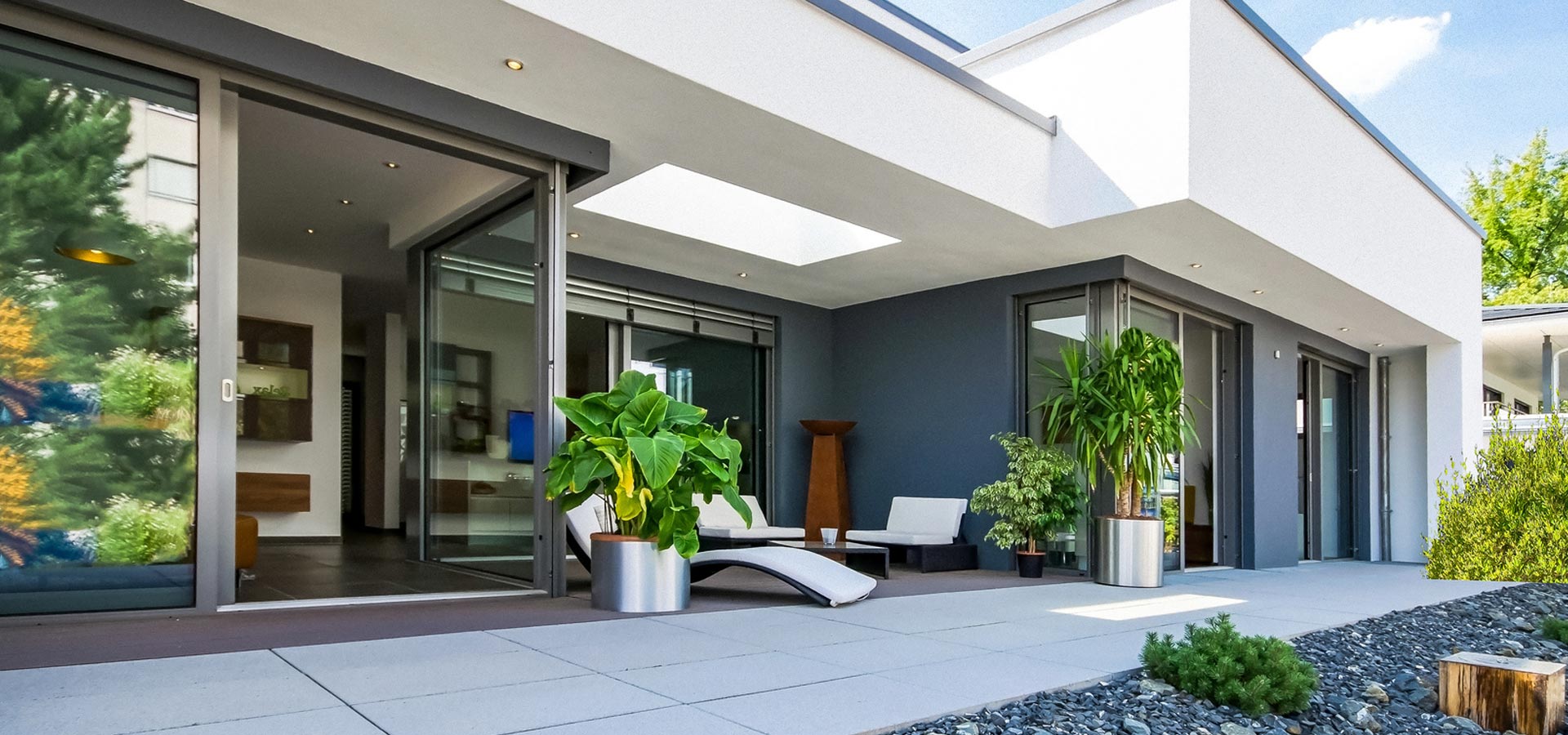
The shell house suits owners who have time, work confidently in several trades, can count on helping hands and have financial reserves. The turnkey house suits everyone who has little leeway because of work, needs a fixed move-in date or wants a clear contact for defects. In between is a hybrid many people underestimate: a turnkey house in which you take over selected jobs that carry little risk and save a lot.
- Painting and wallpapering
- Laying floor coverings
- Garden, paths and fence
- Clearing up and disposal
- Assembling furniture and built-in cupboards
Recommendation: Count on your own work only where you have already done the job successfully. Anyone tiling for the first time often takes twice as long as a professional.
If you think bigger and are planning a prestigious property, the article on building a villa covers the building plan, checklist and architectural styles. For classic family house building, the comparison of buying or building a detached house is worthwhile. And whether simpler standards can lower costs in future is shown in the article on building type E.
How to approach the decision
- Obtain two comparable quotes with building specifications.
- Compare all trades in one table.
- Estimate your own hours and skills honestly.
- Involve the bank early and document your own work.
- Plan a time buffer and a ten percent cost buffer.
Our conclusion
The shell house is not cheaper across the board, and the turnkey house is not more expensive across the board. The price advantage only arises when time, skill and reserves are available and the work goes without mishaps. For most owners with a full-time job and a family, the variant with a fixed price and a clear deadline is the calmer choice, even if the quoted price looks higher. Decide on the basis of the total calculation, not the first number.
Frequently asked questions about shell houses and turnkey building
Is a shell house always cheaper?
No. The advantage only comes from saved labour costs. Material, tools, specialist firms, insurance and a longer double burden eat part of it up again, in unfavourable cases the entire advantage.
Which jobs are owners not allowed to do themselves?
Connection to the electricity and gas networks may only be done by registered specialist firms. With structural work, waterproofing and heating systems, laypeople should also keep their hands off, if only because warranty and insurance cover can otherwise suffer.
How much of my own work will the bank recognise?
Each lender decides for itself. As a rule of thumb, ten to 15 percent of the building cost is often accepted if the planned work is calculated and documented in a traceable way.
What does a fixed price in a building contract really mean?
The price applies to the agreed scope and within the agreed binding period. Special requests, extras and items not in the building specification are added. So check the binding period, escalation clauses and exclusions.
Is a mix of both models worthwhile?
Often yes. A turnkey house with targeted DIY work on painting, floors and garden saves money without endangering the move-in date and the warranty for the critical trades.
Roof: planning, construction and renovation of roof trusses & roof coverings
Build or buy an apartment house? Construction Costs, Interest & Financing

Construction Loans: Calculation, Current Interest, Interest Rate, and Interest Rate Development
As Few New Dwellings as 2012: Germany’s Construction Crisis at Rock Bottom

Investing 1 Million Euros: Real Estate, ETFs & the Best Strategy

Rental Prices 2026: Why Tenants in Munich, Berlin and Frankfurt Keep Paying More





EToro Trading App: Stocks, ETF, Cryptocurrency (Bitcoin), … Costs, rating + experience
Buy Real Estate 2026: Is It Still Worth It? Market Analysis & Forecast

Sell villa in Meerbusch: Sought-after villa location near Düsseldorf

Sell a villa in Düsseldorf: Prices, real estate agent, checklist + buyer waiting list