2.4 Million new apartments by 2030: What Germany needs now
2.4 Million housing units by 2030: A target Germany will miss
The Cologne Institute for Economic Research (IW Cologne) has estimated the cumulative housing demand by 2030 at 2.4 million new housing units. This figure is composed of the ongoing deficit reduction, the demographic-driven new demand from household formations, and the replacement demand for obsolete existing stock.
At the current construction pace — around 215,000 completions per year, with a moderate recovery to 230,000–250,000 by 2028 — about 1.3 million units will be completed by 2030. This corresponds to a coverage rate of 54 percent of the total demand.
The consequence: The structural supply deficit will continue to grow, not shrink, by 2030. For investors, this is the most important long-term market statement.

Social housing is the most lacking: The forgotten segment
Within the overall deficit, the social housing segment is particularly critical. The stock of social housing has dropped from 2.6 million (2006) to under 1.1 million (2026) — a decline of over 57 percent in 20 years. Approximately 40,000 units are losing their social binding each year, while only about 20,000–25,000 new units are added.
The net loss of 15,000–20,000 social housing units per year is known politically, but structurally it is difficult to solve: Social housing construction is not economically viable without significant subsidies, and the subsidy budgets of the federal government and the states are far from sufficient.
For private investors: The social housing segment is not an attractive direct investment field, but the decline intensifies pressure on the general housing market — which in turn strengthens rent increases and oversupply in the mid-range segment.
What would structurally be necessary: Four levers
1. Interest rate relief through KfW funding programs
The KfW new construction funding caused significant damage in 2022/2023 due to the funding freeze. Reliable, low-interest KfW loans could provide a 0.5–1 percentage point interest advantage compared to market conditions — enough to make many projects economically viable again. A permanently reliable program would be necessary, not annual budget discussions.
2. Bureaucracy reduction and acceleration of approvals
A building permit process in Germany takes an average of 5.9 months — over 12 months in peak regions. In the Netherlands or Denmark, a comparable process is completed in 6–8 weeks. Digitalization of building permit procedures, uniform standards, and adequately staffed building authorities could halve the lead time.
3. Building type E and simplification of standards
The Building Type E initiative is a building block that can enable cost savings of 8–12 percent. Supported by a revision of the parking regulations (often oversized in urban areas) and more flexible rules for attic conversions, an additional 5–8 percent could be added.
4. Land policy and activation of land parcels
Public properties — railway brownfields, municipal reserve land, military sites after return — are activated too slowly and too expensively. A consistent land policy with leasehold models for socially mixed housing would substantially reduce land costs, which account for 20–30 percent of total costs.

Why it still won’t be enough — the structural dilemma
Even if all four levers were tightened simultaneously — which is politically unrealistic — Germany would not fully achieve the 2030 target. The reason lies on the capacity side of the construction industry:
- Shortage of skilled workers: According to the Central Association of the German Construction Industry, the construction industry is short over 80,000 qualified workers
- Capacity limits with suppliers: Prefabricated component manufacturers, window and door factories, sanitary installation companies — all are working at capacity limits
- Lead times: Self-decided and self-funded projects take 18–36 months to complete
The structural deficit cannot be made up in a political cycle. This is the sobering reality — and at the same time the long-term foundation for real estate investors.
Outlook 2030: What remains for investors
The forecast up to 2030 is clear: The structural supply deficit will remain, rental prices will continue to rise in metropolitan areas, existing properties in prime locations will
The challenge: Buy selectively, prioritize location, and adjust the financing structure to a permanently higher interest rate level. Those who do this invest not against the market — but with the strongest structural tailwinds the German real estate market has offered in decades.
As Few New Dwellings as 2012: Germany’s Construction Crisis at Rock Bottom

Investing 1 Million Euros: Real Estate, ETFs & the Best Strategy
Rental Prices 2026: Why Tenants in Munich, Berlin and Frankfurt Keep Paying More
Real Estate Investment 2026: Why 84 Percent of Investors Are Betting on Residential Property
Private jet for real estate investors: Charter as a strategic tool
Tenancy Law Reform 2026: What the New Rent Act II Means for Landlords

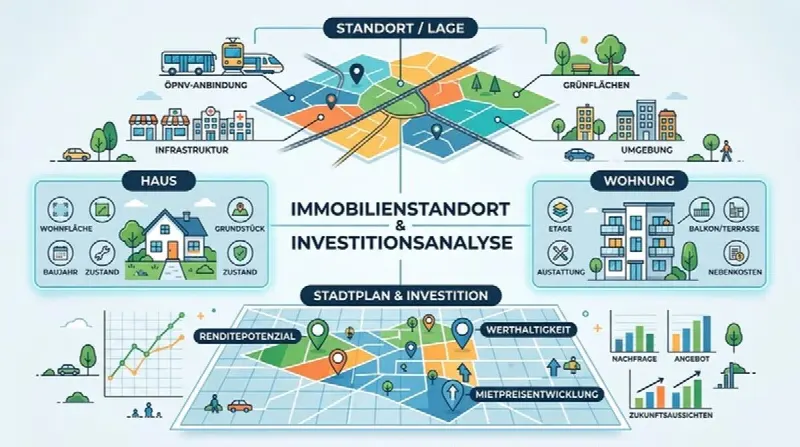



Sell a villa in Düsseldorf: Prices, real estate agent, checklist + buyer waiting list
Sell a villa in Düsseldorf: Prices, real estate agent, checklist + buyer waiting list
Sell a villa in Berlin: List, Rating, Prices, Real Estate Agent, Mistakes, Experiences
Villa for sale Hamburg: List, Rating, Prices, Real Estate Agent, Experiences