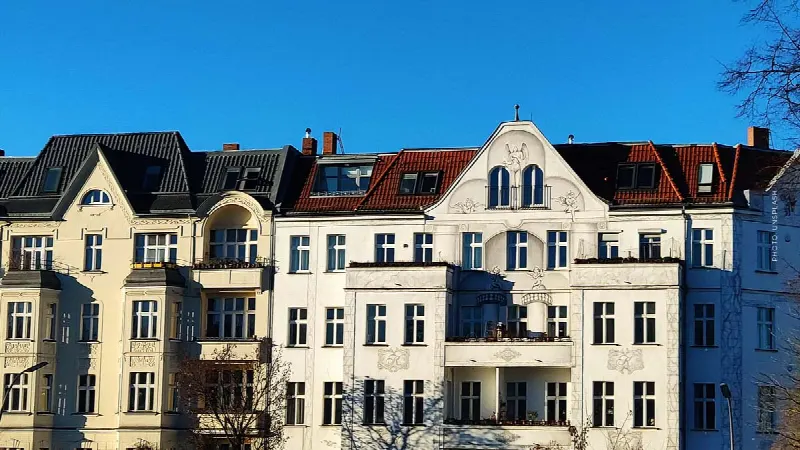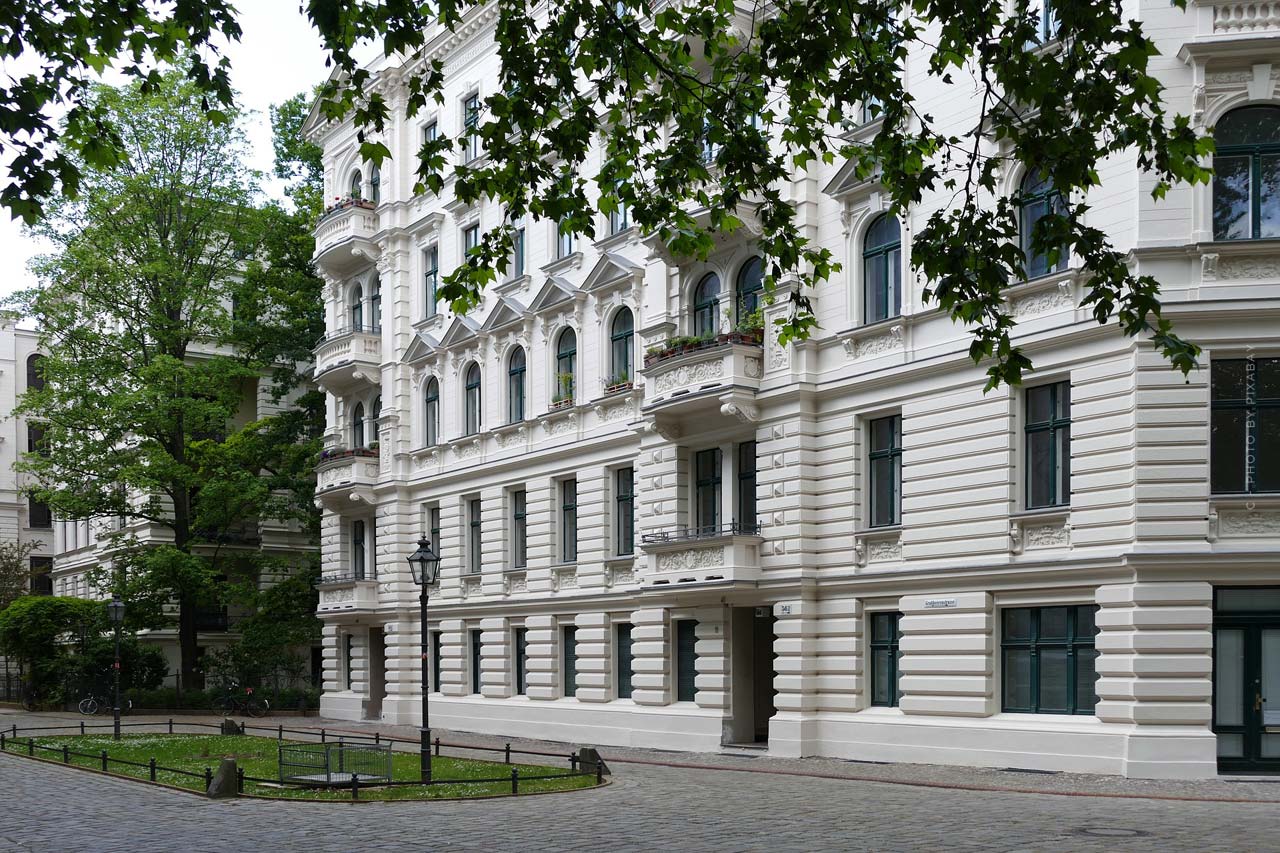
Berlin | Prenzlauer Berg | Apartment building | 5,000,000 € with approx. 2.9% return
An Apartment building in Prenzlauer Berg for 5 million € with a 2.9 % return — at first glance, this number seems tight. Whoever understands Berlin as a market knows: In the top locations of the district Pankow, the gross return is not the lever, but the value appreciation, the tax leverage effect through depreciation and the rent index delta in case of tenant turnover. This article shows how the purchase price fits into the market environment, which rent range is realistic, when the investment qualifies as an Investment — and which regulatory stumbling blocks specifically in Prenzlauer Berg shift the calculation. Whoever buys here should not read the purchase price factor in isolation, but in relation to the micro-location, the tenant structure and the tax optimization possibilities.
Prenzlauer Berg: Micro-location and Buyer Profile
Prenzlauer Berg belongs to the Pankow district and is the second most expensive inner-city residential area in Berlin after Mitte. The location between Kollwitzplatz, Helmholtzplatz and Bötzowviertel defines the market — here, renovated Gründerzeit-era buildings compete with high-quality new constructions in the second tier. Anyone wanting to understand the Berlin real estate market cannot ignore the Pankow premium segment.
Buyer profile: Who really buys here?
The buyer profile is clearly segmented: Family offices, foundations and wealthy private investors dominate the apartment building segment. End-users almost exclusively appear in the rental market, not in the rental property market. Anyone buying here as an individual effectively enters an institutional competition — accordingly professional the purchase structure must be:
- Family Offices — Buy mostly through holding structures, frequently share deal, holding period 15+ years
- Foundations / Insurers — Focus on cash flow stability, accept low returns for AAA locations
- Private investors (HNWI) — mostly asset deal, equity ratio often 40–50 %, focus on depreciation leverage
- Existing owners — strategic expansion of a Berlin portfolio, synergies in management
- International buyers — primarily from DACH, Scandinavia, Israel; mostly through German vehicles
What makes Prenzlauer Berg different from other Berlin locations
Six structural characteristics shape the market and explain why factors over 30 are not overpriced here, but market-appropriate:
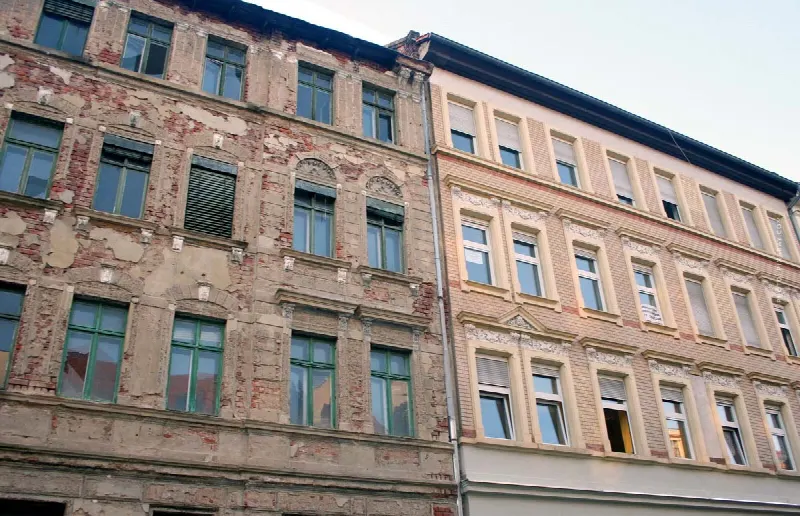
- Old building share over 80 % — buildings from the turn of the century, often protected as monuments
- Milieuprotection areas — large parts are subject to social preservation regulations under § 172 of the Building Code
- Low vacancy rate — typically under 1 %, with new rentals usually involving a bidding process
- International tenant base — high proportion of academics, stable creditworthiness, low risk of rental default
- Limited divisibility — conversion into condominiums requires approval
- Infrastructure premium — Tram M2/M10, S-Bahn Ring, gastronomy density among Berlin’s top 3
Price ranges in the district
The typical €/m² prices for existing properties in Prenzlauer Berg are significantly above the Berlin city average. The premium compared to outer districts like Marzahn or Spandau regularly amounts to 80–120 %.
| Location | Apartment Value (€/m²) | MFH-Factor (Annual Rent) | Gross Yield |
|---|---|---|---|
| Prenzlauer Berg (Kollwitzkiez) | 7.500–9.500 | 30–35 | 2.8–3.3 % |
| Prenzlauer Berg (Outlying Areas) | 6.000–7.500 | 27–32 | 3.1–3.7 % |
| Mitte | 8.000–11.000 | 32–38 | 2.6–3.1 % |
| Friedrichshain | 5.500–7.500 | 26–31 | 3.2–3.8 % |
| Berlin City Average | 4.500–5.500 | 22–27 | 3.7–4.5 % |
Standard Land Value by Kiez
Within Prenzlauer Berg, the standard land value varies significantly by micro-location. This variation is relevant because the asset value method is used in bank appraisals:
- Kollwitzkiez — 6.500–8.500 €/m² (Premium location)
- Helmholtzkiez — 5.500–7.500 €/m²
- Bötzowviertel — 5.000–7.000 €/m²
- Thälmannpark / Greifswalder Straße — 4,000–5,500 €/m²
- Pankow Süd / Schönhauser Allee Nord — 3,500–5,000 €/m²


Putting the 2.9 % Return into Perspective
A gross return of 2.9 % corresponds to a purchase price factor of around 34.5. This is high in the overall Berlin market — but typical for renovated class-A old buildings in Prenzlauer Berg. The key question is not “why so little return”, but rather: What share of the total return comes from ongoing rents and what share comes from appreciation, depreciation, and reletting rent?
In top locations in Berlin, the gross return is an entry ticket, not an investment argument. The return is generated through appreciation, tax deferral through depreciation, and the reletting rent level — not through the ongoing cash flow.
Return scenarios for a 5 million € investment
The following table shows four realistic scenarios — from conservative holding to fully renovated repositioning. The key factor is tenant turnover: With each tenant change, the cold rent can be adjusted to the local market level.
| Scenario | Annual rent | Gross yield | Net yield (after expenses) | Factor |
|---|---|---|---|---|
| Conservative (existing, capped) | 130,000 € | 2.6 % | 1.7 % | 38.5 |
| Current property | 145,000 € | 2.9 % | 2.0 % | 34.5 |
| After tenant turnover (10 Y.) | 185,000 € | 3.7 % | 2.7 % | 27.0 |
| Completely renovated + relet | 210,000 € | 4.2 % | 3.1 % | 23.8 |
The difference between gross and net yield results from management, maintenance and rent loss. For an old building MFH in Prenzlauer Berg, a discount of 25–30 % is realistic, as the
The difference between the existing rent and the local comparable rent is the actual value indicator. An example property with 1,000 m² of living space illustrates the leverage effect:
- Existing rent (old, capped) — 7.50 €/m² × 1,000 m² × 12 = 90,000 € p.a.
- Local comparable rent — 13.00 €/m² × 1,000 m² × 12 = 156,000 € p.a.
- Delta per year with full adjustment — 66,000 € (+73 %)
- Value increase MFH with factor 30 — about 1.98 million € additional market value
- Realistic adjustment period — 8–12 years through natural fluctuation
Cash flow calculation after financing and taxes
Gross yield says nothing about what ends up in the account at year-end. An honest investor calculation looks like this (5 million € purchase price, 60 % LTV, 3.8 % interest, 1.5 % amortization, depreciation benefit at 42 % marginal tax rate):
| Position | Amount p.a. | Comment |
|---|---|---|
| Rent income gross | +145.000 € | Current rent |
| Management (15 %) | −21.750 € | Management, maintenance |
| Interest expense (3.8 % on 3 Mio.) | −114.000 € | tax deductible |
| Operating cash flow before repayment | +9.250 € | before tax and repayment |
| Depreciation (2 % on 80 % of 5 Mio.) | −80.000 € | notional expense, no cash |
| Tax loss | −70.750 € | deductible against other income |
| Tax savings (42 %) | +29.715 € | real cash effect |
| Repayment | −45.000 € | Wealth building, no loss |
| Net cash flow after tax | −6.035 € | almost break even |
The result: The cash flow is nearly zero, but the amortization builds up 45,000 € Equity annually, the depreciation defers taxes of about 30,000 €, and the appreciation runs in parallel as a third pillar. Total Return instead of Cash Yield — this is the investment logic in A-locations.
Appreciation Scenario over 10 Years
Conservative assumptions for the value development of the 5-million-object at different annual appreciation rates:
| Appreciation p.a. | Value after 5 Years | Value after 10 Years | Value after 15 Years |
|---|---|---|---|
| 2 % (Pessimistic) | 5.52 Mio. € | 6.09 Mio. € | 6.73 Mio. € |
| 3.5 % (Base Scenario) | 5.94 Mio. € | 7.05 Mio. € | 8.38 Mio. € |
| 5 % (A-Location Average) | 6.38 Mio. € | 8.14 Mio. € | 10.39 Mio. € |
| 6.5 % (historically Kollwitzkiez) | 6.85 Mio. € | 9.39 Mio. € | 12.86 Mio. € |
Tax Optimization: The Second Largest Lever
With a 5 million euro investment, the tax structure determines several hundred thousand euros of lifetime performance. The most important adjustment factors should be clarified before the notarization — not afterwards.
Depreciation: Maximize the Tax Base
Depreciation is calculated only on the building portion, not on the plot. For existing properties in Berlin, the division is negotiable — and thus a real optimization lever:
- Pre-1925 old building — 2.5 % linear over 40 years
- Old building from 1925 onwards — 2.0 % linear over 50 years
- New building (from building application 2023) — 3.0 % declining (special program)
- Building-plot division — standard appraisal often 70/30, optimization up to 80/20 possible
- Acquisition-related expenses — within 3 years over 15 % of the purchase price = mandatory capitalization
Monument Depreciation under § 7i EStG
Many Gründerzeit buildings in Prenzlauer Berg are protected as historical monuments. The historical monument depreciation allowance is one of the strongest tax levers in the German real estate market — provided that the renovation costs are eligible for support:
- Years 1–8 — 9 % p.a. on the renovation portion
- Years 9–12 — 7 % p.a. on the renovation portion
- Total depreciation — 100 % of the eligible renovation costs within 12 years
- Prerequisite — Certificate from the monument protection authority before the start of renovation
- Example effect — with 1 million € eligible renovation and 42 % marginal tax rate: approximately 420,000 € tax savings
Speculation question

Investment Real Estate: What You Need to Pay Attention to When Buying Your First Property

Berlin | Kreuzberg | Apartment building | 3,700,000 € with approx. 2.7% return
Berlin | Friedrichshain | Apartment building | 3,100,000 € with approx. 5.00% return
Berlin | Lichterfelde | Apartment building | 4,450,000 € with approx. 1.88% return
Berlin | Mitte | Apartment building | 15,000,000 € with approx. 2.9% return
Berlin | Friedrichshain | Apartment building | 2,680,000 € with approx. 3.75% return