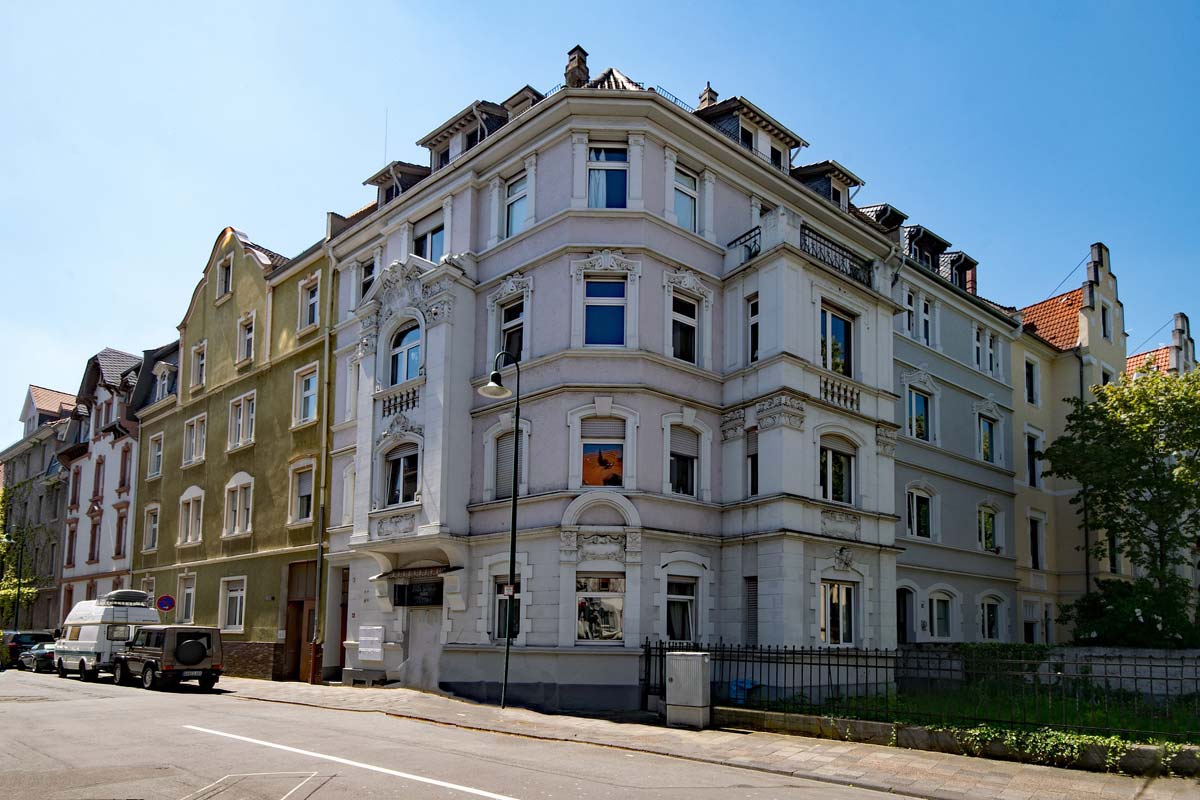
Berlin | Mitte | Apartment building | 15,000,000 € with approx. 2.9% return
An apartment building in Berlin-Mitte with a volume of around 15 million € and a gross return of 2.9% appears to be moderately priced at first glance — yet those who understand A-locations know: here, profits are not made through ongoing cash flow, but through substance, value appreciation, and rental adjustment potential. Before you place a bid, you should calculate the purchase price factor, calculate the net return, and clearly assess the role of real estate as an investment in your overall strategy. This article places the specific property, the micro-location, and the typical return expectations of institutional investors in the center — including DSCR stress test, share deal modeling, and ESG risk profile.
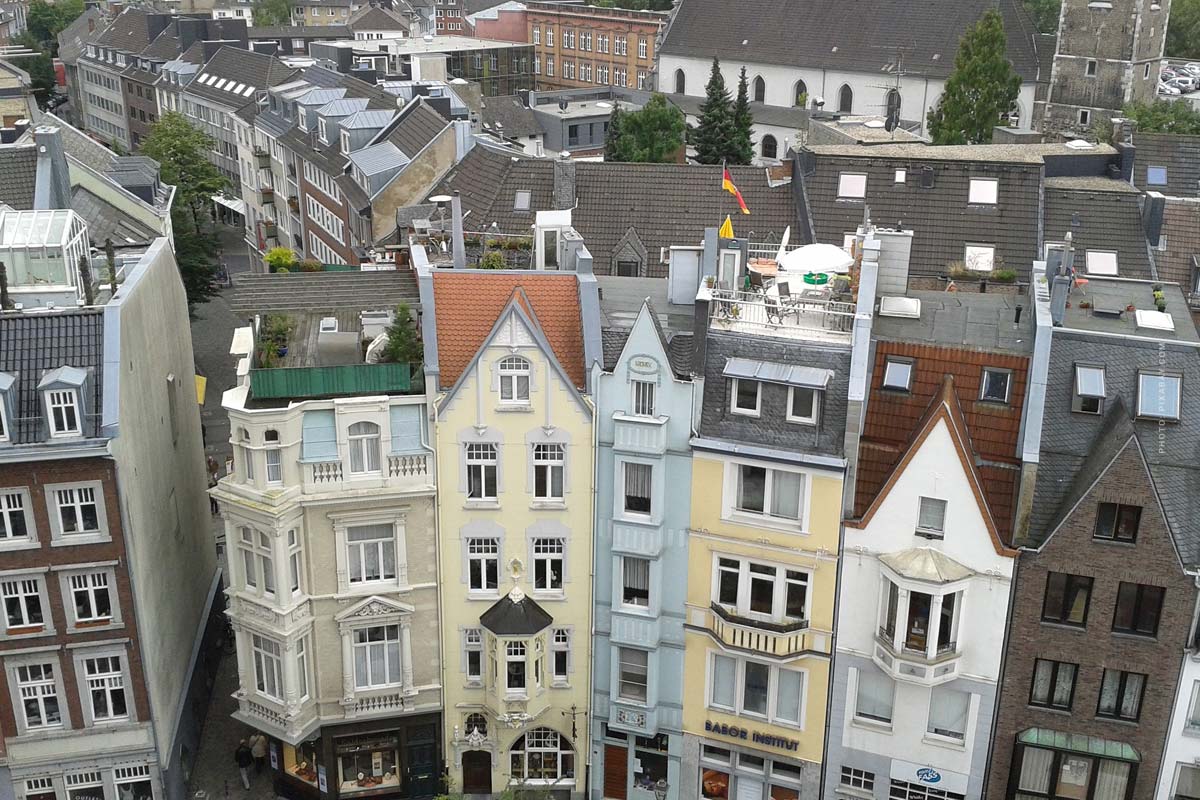
Berlin-Mitte: Micro-location, Buyer Profile, Price Level
Berlin-Mitte is not a district, but a mosaic of neighborhoods with very different investment logic. Whoever understands Mitte as a return location must separate the sub-markets — because there are worlds of difference in factors and buyer profiles between Spandauer Vorstadt and Wedding.
The most important sub-markets in the district of Mitte
The following six neighborhoods shape the investment profile of Mitte. Each has its own buyer audience, its own price level and its own legal complexity — whoever speaks generally of “Mitte” regularly confuses the league.
- Spandauer Vorstadt / Hackescher Markt: Gründerzeit-era old buildings, highest price per square meter in the district, international buyer audience, factor 32–40
- Rosenthaler Vorstadt: Premium-Altbau, high rental demand, many protected neighborhoods, Factor 30–36
- Friedrichstadt / Gendarmenmarkt: Mixed-use residential/commercial, representative addresses, Factor 28–34
- Tiergarten / Hansaviertel: Diplomatic district, quiet residential areas, low Offer, Factor 28–33
- Moabit: Ongoing appreciation, entry-level for institutional buyers, Factor 24–30
- Wedding (Mitte-Nord): Latecomer quarter with development potential, Factor 22–28
Price level in comparison
The average housing prices in the district Mitte are significantly higher than the Berlin average. The following ranges are typical for multi-family homes in the core areas:
| Location | Purchase Price €/m² (Existing Rented) | Factor (Gross Rent) | Gross Yield |
|---|---|---|---|
| Spandauer Vorstadt | 7.500 – 11.000 | 32 – 40 | 2,5 – 3,1% |
| Rosenthaler Vorstadt | 6.800 – 9.500 | 30 – 36 | 2,8 – 3,3% |
| Tiergarten / Hansaviertel | 6.500 – 9.000 | 28 – 33 | 3,0 – 3,6% |
| Moabit | 4.800 – 6.800 | 24 – 30 | 3,3 – 4,2% |
| Wedding | 4.000 – 5.800 | 22 – 28 | 3,6 – 4,5% |
| Berlin Average | 4.200 – 5.500 | 22 – 27 | 3,7 – 4,5% |
The 2.9% gross yield of the offered property corresponds to a factor of about 34 — this is exactly the range traded in the premium sub-markets of Spandauer and Rosenthaler Vorstadt. Market-conform, but only attractive if there is potential for rent increases.
Buyer profile and typical tickets
The market for mid-sized multi-family homes between 10 and 30 million € is dominated by a limited number of institutional and semi-institutional buyers. Anyone bidding here should know the competition:
- Family Offices DACH: Tickets 8–25 million, classic buy-&-hold logic, often discreetly through specialist agents
- Family Offices Scandinavia / NL / CH: Tickets from 15 million, euro security motive, cash buyers
- Asset Managers (Patrizia, Industria, Becken, Hines): mostly from 20 million upwards, fund structure
- Berlin property holders (Bauwerk, Trockland, Ziegert business): opportunistic, often with subdivision ambitions
- Municipal housing companies (Howoge, Gewobag, degewo): pre-emption right buyers, press prices to market value
- Asian Family Offices (HK, Singapore): Rare, but strong in payments — prefer representation addresses on Gendarmenmarkt



The object in the factor check: 15 million € at 2.9%
A 15 million euro object with a 2.9% gross return generates an annual target rent of about 435,000 €. With typical net cold rents in central Berlin of 14–18 €/m², this corresponds to a living area of about 2,000–2,600 m² — thus a classic Gründerzeit apartment building with 18 to 30 units.
The factor in A-locations in Berlin is not a return signal, but a scarcity price. Whoever buys in the center buys the existing guarantee — the return comes from value appreciation, not from ongoing rent.
What justifies the factor in the center
At first glance, factors around 34 for a cash flow investment seem ambitious. Six structural factors explain why institutional investors still accept this rating — and why the price level also remains surprisingly stable even during correction phases.
- Location stability: The center does not lose its top address in any economic scenario
- Rent demand: Vacancy rate in the district permanently below 1%
- Rent increase potential: Existing rents often 30–50% below market rent
- Substance: Wilhelmine-era building with high value stability and scarcity premium
- International demand: Family Offices from DACH, Scandinavia, Asia as buyers
- Inflation protection: Tangible asset in a market near the ECB
From Gross to Net: The Honest Return Calculation
The stated 2.9% is gross return — the truth lies beneath. When purchasing an existing multi-family house in Berlin, you must factor in the following deductions before even calculating the capital service:
| Position | Assumption | Amount p.a. |
|---|---|---|
| Gross rental income | 2.9% of 15 million | 435,000 € |
| Rent default risk | 2% | – 8,700 € |
| Management (external, MFH rates) | 25 €/unit/month × 24 units | – 7,200 € |
| Maintenance (Peters’ formula, old building) | 11–14 €/m² × 2,300 m² | – 28,000 € |
| Non-recoverable additional costs | approx. 5% of gross rent | – 21,750 € |
| Net cold rent before capital service | 369,350 € | |
| Net return (NOI / purchase price) | 2.46% |
Whoever reads “2.9% return” in marketing brochures is actually calculating with roughly 2.4–2.5% net initial return. This is not a trick, but market standard — you just need to understand it.
Total Return instead of Rental Return: The Real Calculation
The 2.9% gross yield masks what institutional buyers in Mitte are actually calculating. The value development of the last decade in Berlin-Mitte ranged between 4.5% and 7% annually — while market rents were rising on average by 4–6% per year.
Example Calculation 10-Year Horizon
| Position | Year 1 | Year 10 (conservative) |
|---|---|---|
| Purchase price / market value | 15,000,000 € | 21,000,000 € (+3.5% p.a.) |
| Target rent p.a. | 435,000 € | 610,000 € (rent adjustment) |
| Gross yield | 2.9% | 4.1% on original value |
| Capital appreciation cumulative | — | +6.0 million € |
| Total Return p.a. | — | approx. 6.5 – 7.5% |
Exactly here lies the difference between a cash flow investment in Moabit or Wedding and a substance investment in Mitte. Whoever uses the
Sensitivity Analysis: What happens under stress
Total return models appear plausible as long as the assumptions hold. Three stress scenarios show how robust the investment really is:
| Scenario | Value development p.a. | Rent adjustment p.a. | Total return p.a. after 10 years |
|---|---|---|---|
| Best Case | +5.0% | +5.0% | approx. 8.5 – 9.5% |
| Base Case | +3.5% | +3.5% | approx. 6.5 – 7.5% |
| Bear Case | +1.0% | +1.5% | approx. 3.5 – 4.0% |
| Stress (Rent Cap Reload) | –1.0% | 0% | approx. 1.5 – 2.0% |
| Crash (Interest rate shock + correction) | –3.0% | +2.0% | approx. 0 – 1.0% |
In the crash scenario, the investment earns nothing over 10 years — but also loses little in real terms, because the asset value cushions inflation. Exactly for this reason, institutional buyers pay the high factor: not for upside, but for downside protection.


Rent adjustment potential: The most important value lever question
The entire investment case depends on one question: How quickly and how much can the existing rent be brought up to the market rent? Berlin has one of the strictest regulations in Germany — those who do not understand this in detail systematically overestimate the value lever.
The legal limits of rent adjustment
- Ceiling limit: Maximum 15% within 3 years (§ 558 Abs. 3 BGB, reduced form in Berlin)
- Berlin rent index: Adjustment only up to the local comparative rent according to the qualified rent index
- Rent brake: When reletting, maximum 10% above the local comparative rent
- Modernization surcharge: 8% of the modernization costs per year on the rent (§ 559 BGB), capped
- Index rent (§ 557b BGB): Linked to the consumer price index — often the most efficient value lever in older buildings
- Index rent (§ 557a BGB): Pre-agreed rent increases — rarely achievable for existing tenants
Realistic rent adjustment in 10 years
For an existing property with an average rent of 9 €/m² and market rent of 16 €/m² (gap 78%), the realistic adjustment looks like this:
- Tenant turnover rate: approx. 4–6% p.a. → 40–60% of units relet in 10 years
- Reletting: Jump to market rent + 10% (rent cap) upon renovation
- Existing stock remains: Adjustment above the cap limit of 15%/3 years = approx. 4.7% p.a.
- Composite calculation of target rent: realistically +35–55% in 10 years — rarely the fully exploited 78%
Anyone who generally calculates a “30–50% uplift” is on the lower end correct. Anyone expecting 70%+ is dreaming — unless they buy with vacancies or are allowed to renovate comprehensively (see neighborhood protection).
Neighborhood protection and rental law: The decisive risk factor
Large parts of Berlin-Mitte are protected under the social preservation ordinance according to § 172 of the Building Code — known as Milieuschutz. This is the most important legal preliminary check for any
Berlin | Lichterfelde | Apartment building | 4,450,000 € with approx. 1.88% return
Berlin | Friedrichshain | Apartment building | 3,100,000 € with approx. 5.00% return
Berlin | Friedrichshain | Apartment building | 2,680,000 € with approx. 3.75% return
Berlin | Kreuzberg | Apartment building | 3,700,000 € with approx. 2.7% return
Berlin | Prenzlauer Berg | Apartment building | 5,000,000 € with approx. 2.9% return
Berlin | Kreuzberg | Apartment building | 5,000,000 € with approx. 3.81% return




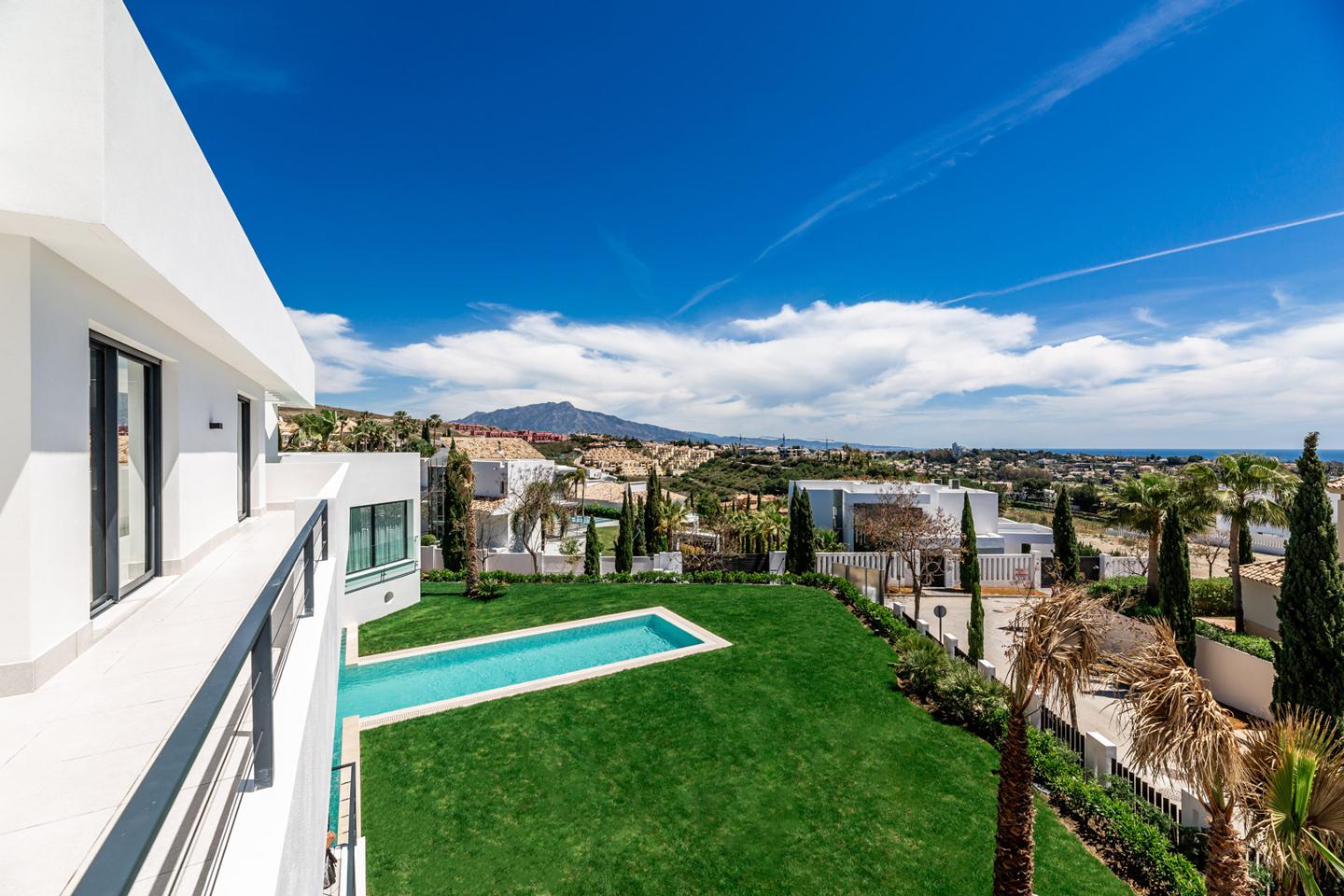





3 Advantages of a Property as a Capital Investment: Inflation Protection, Debt Capital & Passive Income

Sell villa in Meerbusch: Sought-after villa location near Düsseldorf
Sell a villa in Berlin: List, Rating, Prices, Real Estate Agent, Mistakes, Experiences
Villa for sale Hamburg: List, Rating, Prices, Real Estate Agent, Experiences