Student Housing: Buy, rent, make money in university & college locations
You want an Investment with manageable risk, but good return? Then start smart: with a student apartment. Low entry costs starting at around 60,000 €, constant demand in university areas and with the right calculation net returns of 5–8 %, in B- and C-cities sometimes over 9 %. Here I show you exactly how this works – with a full example calculation, location ranking, risk check and insider tips for furnished rentals.
Why student apartments are worth it
In almost all German university cities, there is a structural housing shortage — according to the Moses-Mendelssohn Institute, thousands of student housing units are permanently missing in the top 30 university cities. This is exactly where your investment comes into play. Small apartments or shared flat rooms near the university (map with universities) are constantly in demand, allow an entry even without significant start-up capital, and can be managed stress-free through a property management.
Constant tenant turnover is an advantage
Students often move more frequently, start a new semester, or switch cities. As an investor, this means you can adjust the rent to the market anew with every tenant change — unlike in long-term tenancies, where index or step rent limit the adjustment scope. This way, there’s no fear of vacancies, but dynamic rent development.
Compact size = High efficiency per square meter
An apartment with 20 to 30 m² costs less to buy and maintain — and often generates 18–25 €/m² through furnishing and built-in kitchen, while existing apartments with 70 m² in the same location only bring in 11–14 €/m². The square meter lever is strongest in micro locations.
Low effort with external management
Instead of handling rental agreements, additional costs settlements, and minor repairs yourself, you hire a property management company — typically 25–40 € per month (special management) for a single apartment. Ideal for beginners or working investors.
- High demand throughout the year — especially at the start of the semester
- Compact properties with above-average square meter return
- Rent adjustment possible with every change
- Management fully delegable

Top Locations: Where student housing really pays off
Not every university city is a good investment. In Munich or Heidelberg, purchase prices are so high that the net return, despite high rents, barely exceeds 3%. Things get interesting in B- and C-cities with a large student population and moderate square meter prices.
A-cities: High security, weak return
Munich, Hamburg, Frankfurt, Cologne: stable value development, but a purchase price factor of 30+ makes cash flow almost impossible. Here you primarily buy for value appreciation, not for return.
B-cities: The Sweet Spot
Leipzig, Dresden, Münster, Bochum, Aachen, Kiel — good mix of purchase price, rental demand, and value stability. Here, net returns of 4–6 % are realistic, and in favorable microlocations even higher.
C-Cities: High returns, higher concentration risk
Magdeburg, Chemnitz, Cottbus, Siegen, Paderborn — returns over 7 % are possible, but: If the university shrinks or a study program is moved, demand can drop. Pay attention to the concentration risk of the university.
| City category | Purchase price (€/m²) | Rent furnished (€/m²) | Gross return | Net return typical |
|---|---|---|---|---|
| A-cities (Munich, Hamburg) | 8.000–12.000 | 22–28 | 2.5–3.5 % | 1–2 % |
| B-cities (Leipzig, Münster) | 3.500–5.500 | 16–22 | 4.5–6 % | 3–5 % |
| C-cities (Magdeburg, Siegen) | 1.800–2.800 | 12–16 | 7–9 % | 5–7 % |
Example calculation: 25-m² apartment in a B-city
To make sure you don’t end up in a dry spot, here’s a complete calculation for a typical student apartment in a B-city like Leipzig or Bochum.
Purchase price and acquisition costs
| Purchase price 25 m² × 4.200 € | 105.000 € |
| Land transfer tax 5 % | 5.250 € |
| Notary & land register approx. 2 % | 2.100 € |
| Real estate agent commission 3.57 % | 3.750 € |
| Improvements (painting, furniture, kitchen) | 5.000 € |
| Total investment | 121.100 € |
Rental income and ongoing costs
| Rent 18 €/m² furnished | 450 €/Month |
| Furniture surcharge separately | 40 €/Month |
| Total cold rent | 490 €/Month = 5,880 €/Year |
| Contribution not chargeable | − 60 €/Month |
| Property management (special ownership) | − 30 €/Month |
| Private maintenance reserve | − 25 €/Month |
| Rent default risk 4 % | − 20 €/Month |
| Net annual income | 4,260 € |
Return calculation
Gross return: 5,880 € / 105,000 € = 5.6 %
With reduced purchase-related expenses (direct purchase without real estate agent) and higher furniture rent, 4.5–5.5 % net in B-locations are achievable — in C-cities even up to over 7 %.
Rule of thumb: Price factor under 20 = return-eligible. Over 25 = primarily value appreciation investment.

What you should consider when buying
Location counts when it comes to the student apartment. Whoever buys centrally gets more rent and finds new tenants more easily. It’s also important that you have control over the purchase ancillary costs — and know your net yield, not just the gross figure from the Exposé.
Micro-location determines reletability
The classic: a small apartment within a maximum of 15 minutes walking distance to the university or with direct tram/subway access. Check additionally: supermarket, bakery, cafeteria, library within the vicinity. Students rent emotionally — not analytically.
Purchase price: existing buildings outperform new construction apartments
Many “student apartment buildings” are sold by the developer with a 30–40 % markup, because they are marketed as an investment product. The art is to find a solid existing property below market value — for example, with a simple condition that can be upgraded with paint, a new kitchen and furniture.
Funding: Not every bank is willing to participate
An important point that is often underestimated: Apartments under 30 m² are often harder to finance for many banks — some do not finance them at all, others only with 20–30 % equity instead of the usual 10–15 %. Get concrete financing commitments before purchasing, not just a rough estimate.
Check WEG risks
In purely student apartment buildings, often 80+ owners make decisions together — this can lead to high maintenance fees, disputes over renovations and special majorities. Check the last three owners’ meeting minutes and the reserve fund for maintenance.
Buy real estate cheaply? Here are my tips from Los Angeles: Buy real estate cheaply (Acquisition)
Plan for property management from the beginning
With frequent tenant changes, the effort adds up. A special property management service takes care of listings, viewings, rental agreements, handover protocols, billing, and communication — typically 25–40 € per month plus a change fee.
The purchase checklist before signing
- Distance to the university maximum 15 minutes walk or 5 public transport stops
- Purchase price factor under 22 (rent × factor = purchase price)
- Service charge under 4 €/m² total, of which reserve fund at least 0.80 €/m²
- Last three WEG minutes read — no major renovations pending
- Financing approval specifically checked according to apartment size
- Rent index and comparison offers for furnished apartments researched
- Location risk related to the university checked (student number trend, program relocations)
- Elevator and energy standard acceptable
- Parking space/bike room situation clarified
More rent through targeted furnishings
You want more than the standard price? Then invest specifically in furnishings — and thereby appeal to students who don’t want to organize their own furniture or kitchen. An apartment “ready to move in” achieves 15–25 % higher per square meter rent.
Built-in kitchen: Rentable standard, no luxury
A reasonable, rentable built-in kitchen with refrigerator, cooktop, exhaust hood, and solid countertop realistically costs 1,500–2,500 € including installation. This sets you apart from the standard — and earns you an additional 30–50 € per month in cold rent plus furnishings surcharge.
Built-in kitchen investment: 2,000 € | Additional rent per month: 40 € | Payback: 50 months without tax effect — significantly faster with depreciation over 10 years and advertising expenses.
Important: Damages to the built-in kitchen cannot be passed on to the tenant in a flat rate. Legally secure, you work with a minor repair clause (maximum 100 € per repair, capped at 8 % of the annual cold rent) and a deposit equivalent to three months of cold rent.
Renting furnished: Calculating the furnishings surcharge correctly
Insider knowledge: The furnishings surcharge is legally calculated as the time value divided by the period of use plus interest. Example: Furnishings investment 2,500 € / period of use 10 years / 12 months = 21 €/month pure depreciation, plus calculated interest results in about 30–40 €/month. In the rental agreement, the furnishings surcharge should be listed separately — otherwise the rent cap applies to the total amount.
Lighter paint, durable floor
A lighter paint makes a big difference. Clean walls and a durable vinyl or laminate floor look modern, are easy to maintain, and can withstand frequent tenant changes. Minimal effort, big effect — and you save yourself renovations between tenancies.
Avoid summer vacancies
July to September is critical in many university cities. Three strategies:
- Rent agreements with a minimum rental period of twelve months (September to September)
- Short-term summer rental to interns, language students, or first-year students
- Market furnished apartments via platforms like Wunderflats, Mr. Lodge, or Homelike
Tax advantages: What makes student apartments particularly attractive
The tax bracket is often forgotten for smaller investments — yet it makes the difference between 3 % and 5 % effective return.
Depreciation: Linear depreciation secures cash flow
Existing properties are depreciated linearly at 2 % over 50 years (3 % for new builds from construction year 2023, check!). With a purchase price of 100,000 € (building share 80,000 €), this amounts to 1,600 € annual depreciation — which reduces or eliminates your rental surplus for tax purposes.
Furniture depreciation over 10 years
Furniture and built-in kitchen are

Buying profile: Cologne, Düsseldorf (NRW), Berlin & Munich - Apartment & Apartment building

Lukinski Rating Germany: Investment Property - City List

Buy a villa in Berlin: Villas as an Investment - Process, Costs, Off Market & Co.
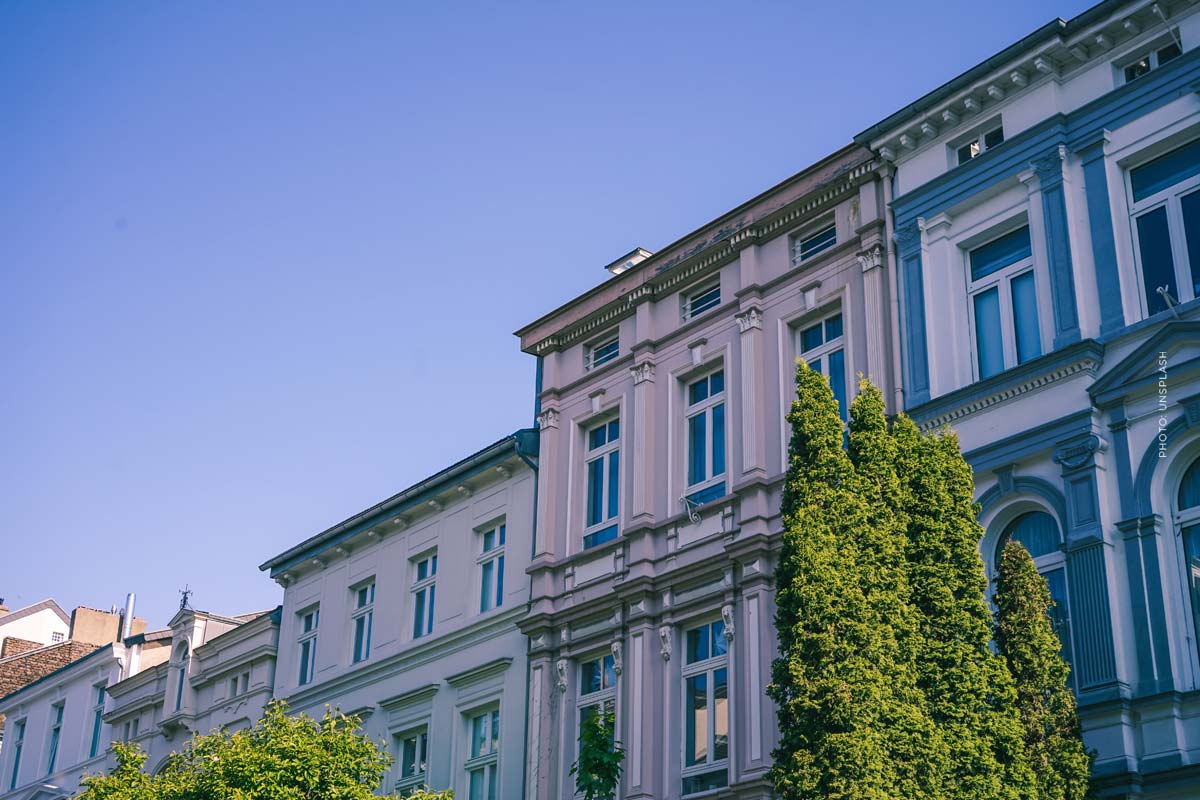
Apartment building for sale in Wuppertal: apartment building & apartment building

Apartment for sale: 12 typical mistakes! Asking price too high, missing documents, wrong timing & Co.

The 7 biggest mistakes when selling a house: price, rating, marketing, negotiation & Co.










Plot of land by the water in Berlin: KP 90 Mio. - Luxury residential development in Germany's capital city

10% tipster commission Berlin: 10.5 million villa south/west - buyers for this and other villas
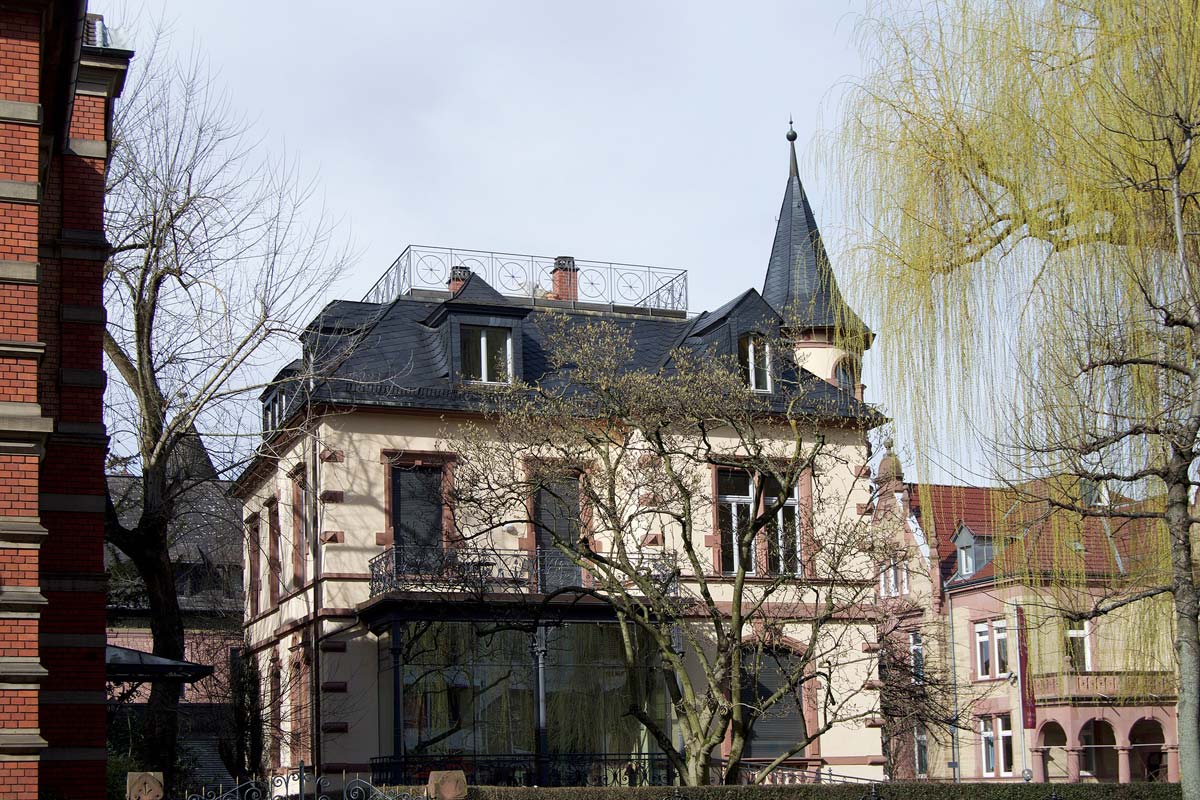
10% tipster commission Frankfurt (Mainz, Wiesbaden): 18 million villa - buyers for this and other villas

A-Lage Real Estate: Advantages, Disadvantages, Profit in Sale - new video