Period property: High ceilings, bay windows and stucco – Investment and Investment
An apartment in an old building in Germany is usually an apartment in a building constructed before 1949 — identifiable by high ceilings, plasterwork, wooden floors, and thick exterior walls. Character and location make old buildings apartments desirable. At the same time, they often come with hidden renovation needs: electricity, wiring, windows, and heating rarely meet modern standards.
You want to Buy an apartment and are considering an old building as an investment? Old buildings with stucco, bay windows, herringbone parquet flooring, and four-meter-high ceilings are among the most sought-after properties on the German real estate market — and at the same time, they are among the most tax-advantageous. Anyone who acquires a protected old building apartment as an investor can deduct up to 100% of the renovation costs within twelve years under § 7i EStG. At the same time, the rental prices for high-quality renovated old buildings in top locations often exceed the rental index by 15–25%. In this investment guide, you will find everything about the definition, tax benefits (monument depreciation), typical renovation costs per trade, return calculation with an example, classic old building risks (asbestos, lead pipes, saltpeter), GEG obligations, and a complete inspection checklist. An overview of the common Apartment types can be found in the main article. Those who are just starting out should first read the guide on their first property.
Old buildings: Definition, characteristics & distinction from new buildings
The term old building is not uniformly defined throughout Germany. In most regions, the following applies: buildings constructed before 1949 (pre-war buildings) are considered classic old buildings. In Berlin, the term old building is sometimes used for buildings constructed before 1918, while in Hamburg and Munich, all pre-war buildings are often considered old buildings. For tax purposes, the threshold of 1925 is relevant: buildings constructed before 1925 may be linearly depreciated at 2.5% (§ 7 Abs. 4 EStG), while later construction years are only depreciated at 2.0% — a direct tax advantage for genuine old buildings.
Architectural features: Stucco, casement windows, herringbone parquet
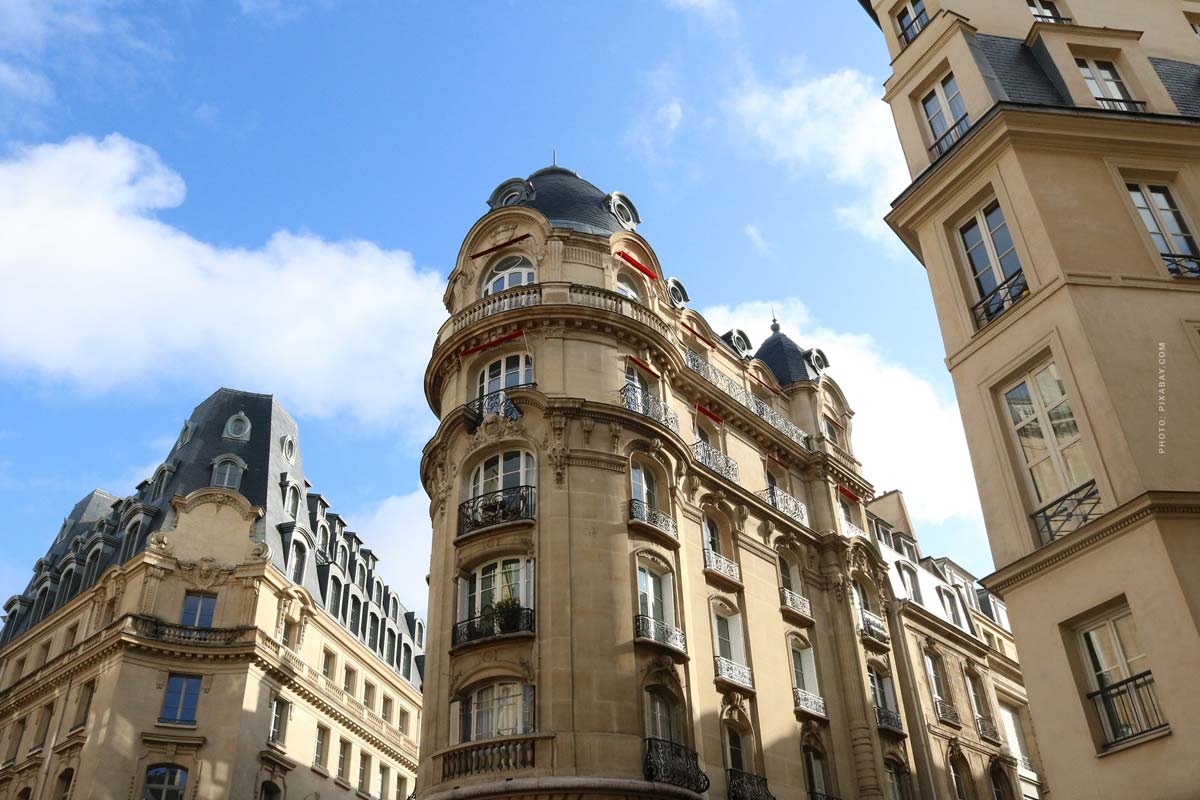
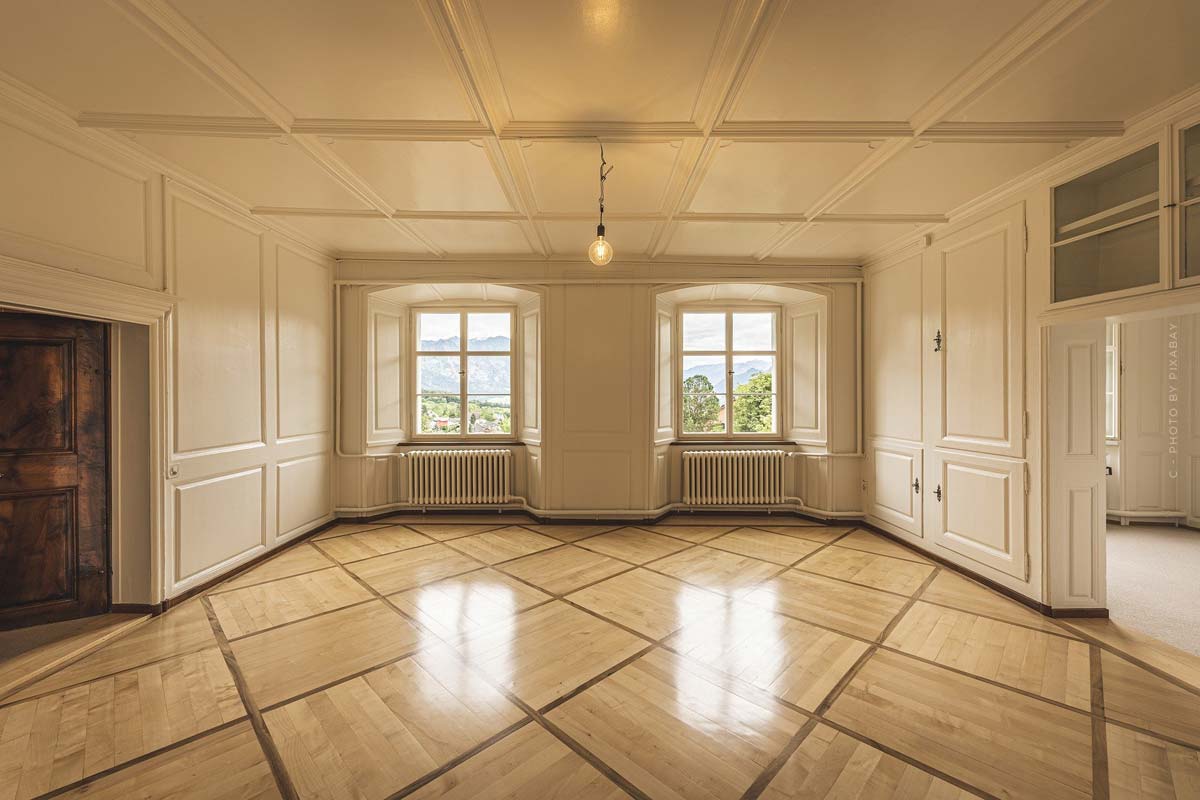
Genuine old buildings can be recognized by typical building elements that cannot be replicated in any new construction:
- Room height 3.00–4.50 m (new building standard: 2.40–2.60 m)
- Stucco-decorated ceilings, ornamental friezes, rosettes
- Double casement windows (two window levels with air gap)
- Herringbone parquet, panel parquet or solid wood floorboards
- French doors with brass fittings, high door thresholds
- Bay windows, balconies, wrought iron balcony railings
- Load-bearing exterior walls made of solid brick (50–70 cm thickness)
- Timber beam ceilings (acoustically echo-prone, structurally often in need of renovation)
Old buildings vs. new buildings: Direct comparison for investors
| Criterion | Old buildings (before 1949) | New buildings |
|---|---|---|
| Linear depreciation | 2.5% (before 1925) / 2.0% | 3.0% (degressive possible) |
| Monument depreciation possible | Yes (§ 7i / § 10f EStG) | No |
| Rent increase (renovated) | +15–25% above rent index | Rent index level |
| Value stability | Very high (A-locations) | More susceptible to mass market |
| Energy efficiency | Often G/H without renovation | A+/A standard |
| Renovation costs | High (1,500–3,500 €/m²) | Low |
| Dismantling/toxic risk | Asbestos, lead, PCP possible | Practically none |
| Sound insulation | Poor (timber beam ceiling) | Very good |
| Character / recognizability | Unique | Interchangeable |

Old building apartment as an Investment: Return, Taxes, Cashflow
For investors, the old building apartment is more than just aesthetics — it is a highly tax-efficient Investment. Three levers determine the return: purchase price (price factor), renovation strategy (maintenance costs vs. construction costs) and tax model (linear depreciation, monument depreciation, maintenance costs). Before purchasing, you should always
Example calculation: 80 m² old building apartment in B-location
| Position | Amount |
|---|---|
| Purchase price (4,500 €/m² × 80 m²) | 360,000 € |
| 36,000 € | |
| Renovation (800 €/m²) | 64,000 € |
| Total investment volume | 460,000 € |
| Cold rent 14 €/m² × 80 m² × 12 | 13,440 € p.a. |
| Gross rental yield | 2.92% |
| Non-recoverable costs (~20%) | −2,688 € |
| Net rental yield | 2.34% |
| 27 |
The return sounds low — before taxes. With monument depreciation and linear building depreciation, the picture changes significantly (see next section). You will find comparable values and further calculations in
Monument Depreciation: § 7i and § 10f EStG — the decisive lever
If the old building is under monument protection, the increased monument depreciation applies. This is by far the strongest tax lever in German real estate law — and applies only to old buildings on the monument list of the respective state authority.
- § 7i EStG (Landlord / Investor): 9% of the eligible renovation costs in the first 8 years, then 7% in the following 4 years — in total 100% deductible over 12 years
- § 10f EStG (Owner-occupier): 9% per year over 10 years — in total 90% deductible
- Prerequisite: Certificate from the responsible monument authority BEFORE the start of renovations
- Additionally: linear depreciation on existing assets (2.5% or 2.0%) continues in parallel
Concretely, this means with 64,000 € renovation costs and a marginal tax rate of 42%: 26,880 € tax savings solely from the renovation — spread over 12 years. You can dive deeper in the guide Buying a listed building.
The underestimated tax trap in old building investments: § 6 Abs. 1 No. 1a EStG. If renovation costs of more than 15% of the building’s purchase price (net, without land share) are incurred in the first three years after purchase, ALL costs are considered acquisition-related production costs — and can only be deducted over the linear depreciation (50 years) instead of immediately.
- Strategy 1: Keep renovation under 15% in the first 3 years → immediately deductible as business expenses
- Strategy 2: Major renovation starting from year 4 → full deduction of business expenses again
- Strategy 3 (Monument): For historic buildings, § 7i EStG applies — the 15% threshold is less relevant here


Renovation costs for old apartments: What does everything really cost?
The most common miscalculation when buying an old building: underestimated renovation costs. Here are realistic ranges per trade — based on average to high-quality execution in German major cities:
| Trade | Cost per m² living area | Note |
|---|---|---|
| Electrical work (complete, with distribution board) | 80–150 € | Mandatory for existing buildings with fabric wiring |
| Sanitary / new bathrooms | 2,500–8,000 € per bathroom (flat rate) | High-end often 12,000+ € |
| Heating (heat pump) | 120–200 € | Includes radiator replacement |
| Windows (historic wooden windows) | 800–1,400 € per window | Plastic often not permitted by heritage regulations |
| Stucco restoration | 50–200 € per linear meter | Specialist trade |
| Refurbish / seal parquet | 30–60 € | If still restorable |
| Parquet completely new | 120–250 € | Solid wood, herringbone |
| Walls / plaster / painter | 40–80 € | |
| Hazardous substance remediation (asbestos/PCP) | 50–300 € | Strongly dependent on the situation |
| Full renovation with complete furnishings | 1,500–3,500 € | Heritage: often +20–40% |

Risks of Old Buildings: Toxins, Structural Integrity, Moisture
A professional old building investor always calculates with a technical due diligence before purchase. The following risks typically occur in pre-war buildings — and none of them is immediately visible at first glance:
- Asbestos: in floor adhesives (flex adhesive), window boards, fire protection panels, floor flex up to around 1990
- Lead pipes: in drinking water pipes up to ~1973 — health critical, complete replacement required
- PCB / PCP / Lindane: in wood preservatives on roof trusses and wooden beams
- Nitre / wall salts: mostly in the base area, result of rising damp
- Wooden floor without fungus test: Real house fungus = complete renovation
- Lack of insulation: according to GEG, retrofitting often required upon change of ownership (top floor ceiling)
- Structural integrity when opening walls: load-bearing walls can only be removed with approval from a structural engineer
- House fungus in the basement: reportable in some federal states
Always commission an independent building expert (fee 600–1.500 €) before signing a purchase contract — the investment pays off when the first defect is found. For Rating and value assessment, asset value method and income value method help with determining market value.
Advantages and disadvantages of an old building apartment at a glance
Advantages: Charm, taxes, value stability
- Historic building depreciation up to 100% in 12 years (§ 7i EStG) — for historic buildings
- Increased linear depreciation of 2.5% for buildings constructed before 1925
- Rent premium of 15–25% above rent index for renovated properties
- Very high value stability in A- and B-locations
- Stucco, high ceilings, bay windows — non-reproducible USP
- Often cellars and crawl spaces as storage space
- Massive construction, high sound insulation of exterior walls
- Less competition in the new construction-driven market
Disadvantages: Renovation, GEG, Sound transmission
- High initial renovation costs (1,500–3,500 €/m²)
- Hazardous substance risks (asbestos, lead, PCP)
- 15% trap with acquisition-related expenses (§ 6 EStG)
- GEG retrofitting requirements upon change of ownership
- Higher
Common questions about old buildings
What is considered an old building in Germany?
In Germany, buildings constructed before 1949 are typically considered old buildings. In some definitions, the cutoff extends to 1978 (before the first thermal insulation regulation). The decisive factors are not only the construction year but also the state of preservation — whether a core renovation has taken place or not.
What are the risks of buying an old building?
Typical risks: outdated electrical systems (aluminum wiring before 1970), uninsulated exterior walls, single-glazed windows, outdated heating systems, and lack of elevators. For a serious purchase decision, it is recommended to consult an expert. As an Investment, renovated old buildings can offer tax advantages due to heritage protection.
When is an old building a good investment?
Then, if it is located in a good inner city location, already fully renovated, and the purchase price is below the new construction price. Monument properties in the old building segment offer additional tax savings potential through increased depreciation (monument depreciation).
You might also like
Investing 1 Million Euros: Real Estate, ETFs & the Best Strategy
Sell a villa in Düsseldorf: Prices, real estate agent, checklist + buyer waiting list

Sell villa in Meerbusch: Sought-after villa location near Düsseldorf
Sell a villa in Düsseldorf: Prices, real estate agent, checklist + buyer waiting list
Sell a villa in Berlin: List, Rating, Prices, Real Estate Agent, Mistakes, Experiences
Villa for sale Hamburg: List, Rating, Prices, Real Estate Agent, Experiences
Discover more SellSell a villa in Cologne: List, Rating, Prices,…
 SellSell a villa in Munich: List, Rating, Prices,…
 HeritageHeritage Self-Help Groups: Inherited Money, What to Do?…
 HowHow much is an apartment building worth? 5…
 SellingSelling an apartment building in Munich: What is…
 RealReal estate holding: box privilege and only 1.54%…
 CostsCosts and benefits of a building expert: An…
 SellingSelling an apartment building in Düsseldorf: what you…
 EnergyEnergy certificate for sale: compulsory? Content, structure, costs…
 BuyBuy a villa in Berlin: Villas as an…