GRAFT: Architects of the highest class – Villa, Quarter & new construction projects + Future
GRAFT Architecture Office — Architecture, urban planning and design at the highest level. Founded at the end of the 90s in Los Angeles, today with studios on three continents. Each project is a statement: futuristic, striking, uncompromising. Over two decades of experience, celebrated residential projects in Berlin, mixed-use districts in the heart of the capital, as well as future projects for E.ON charging infrastructure and Volocopter air taxi ports. From the investor’s perspective particularly interesting: Signature architecture by GRAFT regularly achieves price increases of between 15 and 30 percent compared to comparable standard villas when resold in Berlin’s top locations. We show the most important Berlin Real Estate by GRAFT — from the Villa M in Grunewald through the Schwanenwerder-Villa to the Quartier “Charly Living” at Checkpoint Charlie — including key figures, value indicators and investment perspectives.
Architectural Office GRAFT: Top Class & Future
GRAFT belongs to the top league of international star architects. Three founders, three continents, a consistently futuristic style. While classical Berlin building traditions rely on plaster facades, brickwork, and straight lines, GRAFT deliberately breaks with convention — and thus provides exactly what financially strong international buyers in Berlin are looking for: distinctiveness. The office is currently developing charging stations for the E.ON E-car network and the worldwide vertiports for Volocopter, one of the first commercial flying taxi systems.
History, Founders and Founding in Los Angeles
GRAFT wurde Ende der 1990er Jahre von Lars Krückeberg, Wolfram Putz und Thomas Willemeit in Los Angeles gegründet. Die Gründer trafen sich erneut während ihres Studiums an der Braunschweiger Hochschule für Gestaltung und reisten dann gemeinsam in die USA — eine prägende Einflussnahme, die den Stil bis heute kennzeichnet: kalifornische Offenheit kombiniert mit deutscher Präzision. Erstes prominentes Privatprojekt: ein Haus für Schauspieler Brad Pitt, der später zum Schlüssel zu einer ganzen Generation prominenter Kunden wurde.
Since then, numerous flagship projects have been created, especially in Berlin. These include the dental clinic concept KU64, the BRLO Brwhouse container architecture in Kreuzberg, the Paragon Apartments in Prenzlauer Berg, and the Natureisstadion Schierke in the Harz.
“the pursuit of happiness” — the core of the GRAFT brand, formulated as a label for architecture, urban planning, design, and music.
Meanwhile, more than 150 employees work for GRAFT. Offices are located in Berlin, Los Angeles, and Beijing. This means the office is directly present in China’s future market — where large projects are regularly completed in a fraction of the time it takes in Germany.
Tip: Read more about Investing in China (Real Estate) here.
Architecture firm at a glance — Profile
- Founders: Lars Krückeberg, Wolfram Putz, Thomas Willemeit
- Foundation: End of the 90s
- Foundation place: Los Angeles, California (USA)
- Studios: Berlin, Los Angeles, Beijing
- Employees: more than 150
- Specialization: Residential architecture (Villa & Quarter), Hospitality, Mixed-Use, Mobility Infrastructure
- New Projects: E.ON Charging Infrastructure, Volocopter Vertiports
- Well-known developers: Brad Pitt (Schwanenwerder), Trockland (Charly Living), E.ON, Volocopter
“We refuse to be bound by traditional, virtual, and real-world boundaries in the workplace and are therefore able to offer more opportunities and an ever-expanding range of solutions in our work.” — Source: graftlab.com
GRAFT compared: Star architects in Berlin
Those investing in signature architecture in Berlin have a limited selection of top firms. Here’s a market overview:
| Architecture Firm | Style | Known for (Berlin) | Client Type |
|---|---|---|---|
| GRAFT | Futuristic, organic | Villa M, Charly Living, KU64 | Public figures, Tech investors |
| David Chipperfield | Minimalist, classic-modern | New Museum, James-Simon Gallery | Institutions, Family Offices |
| Sauerbruch Hutton | Colorful, building physics | GSW high-rise, Maritime Museum | Corporates, public sector |
| Daniel Libeskind | Deconstructivist | Jewish Museum, Sapphire residential building | Collectors, international buyers |
| Norman Foster | High-Tech, transparent | Reichstag dome, Free University | Major investors |
Awards and Prizes
GRAFT is one of the most awarded architecture firms in Germany. Selection:
- Red Dot Design Award — Communication Design, Visualisation Object Carpet
- Iconic Award — Interior Innovation, CAELA Lighting System
- Award Deutscher Wohnungsbau — Paragon Apartments (1st Prize)
- Iconic Awards Innovative Architecture — Natureisstadion Schierke (Winner)
- German Design Award — Natureisstadion Schierke (Special Mention)
- AIT Award, Architizer A+ Award, Best Architects Award (multiple)
Interview with the founders of GRAFT
The founders of GRAFT are experienced and award-winning architects. With FIV Magazine, the founders have spoken about company philosophy, their friendship, founding the company, and future projects.
- Interview: GRAFT Architectural Office
- Interview: Future Real Estate
GRAFT in Berlin: Tour & Architecture
Let’s start a city tour through the districts of Berlin with three prominent GRAFT projects — from the private villa in Grunewald, over the island location of Schwanenwerder, to the mixed-use district in Berlin-Mitte.
Villa M in Grunewald: Findling, spaceship — unique
One of the most prominent GRAFT designer villas is located in Berlin Grunewald, one of the most exclusive districts of the capital. The property was clad with individually manufactured ceramic tiles — specially made by a manufacturer in Potsdam, each tile a unique piece.
From a distance, the building appears like a huge boulder that has been thrown onto the plot. The geometric, monolithic shape also reminds of a landed spaceship — a deliberate break from the classic white stucco villas in the surrounding area.
Not just living, being! Inspiring architecture.
Profile Villa M:
- Location: Berlin Grunewald (top location)
- Architect: GRAFT
- Facade: Handcrafted ceramic tiles (uniques)
- Style: Monolithic, futuristic (“Findling”)
- Standard land value Grunewald: Top-tier properties with four-digit figures per square meter of plot
- Investment aspect: Signature architecture in top location = above-average value stability
More about the location: Berlin Real Estate and Luxury districts in Berlin.
Villa on Schwanenwerder: Hollywood star as builder
Even more impressive than Villa M is an object on Schwanenwerder — one of the most discreet addresses in Germany. The peninsula in Wannsee has less than 50 properties and is home to a large portion of Berlin’s Old & New Money. Names are not mentioned out of discretion — they range from DAX board members to family business owners and international artists.
The GRAFT-Villa itself stretches along the plot all the way down to the water. Its shape resembles a runway: extremely elongated, flat, glassy. It radically stands out from the surrounding stock of classical villas and Bauhaus residences. Original builder: Brad Pitt — who ultimately did not move in himself, but influenced and made the property internationally known.
Profile Villa Schwanenwerder:
- Location: Schwanenwerder Island, Berlin (at the Großen Wannsee)
- Living area: over 1,000 m²
- Plot: approximately 10,000 m²
- Features: main villa, guest house, boathouse, direct lake access
- Original builder: Brad Pitt (did not move in)
- Market value indication: Schwanenwerder properties change hands in the high double-digit million range; off-market transactions are the norm
- Investment aspect: Extreme scarcity (capped number of properties), maximum discretion, strong international buyer interest
Schwanenwerder belongs together with Dahlem and Grunewald to the three most expensive residential areas in Berlin — those who sell here almost always act Off-Market.
“Charly Living”: Quarter at Checkpoint Charlie
GRAFT realizes not only standalone villas, but also large mixed-use projects. The “Charly Living” quarter is being built directly at Checkpoint Charlie in Berlin-Mitte — one of the city’s historically and touristically densest addresses. Here, the office shows that futuristic design language also works in multi-story residential construction.
Charly Living profile:
- Location: Berlin-Mitte, directly at Checkpoint Charlie
- Usage: Mixed-use (residential, hotel, retail, museum, gastronomy)
- Residential units: several hundred
- Architecture: Sculptural facades, curved lines, high atriums
- Investment aspect: A-location Berlin-Mitte, international tenant clientele, recognition value through star architecture
- Rent level: Premium segment (significantly above average for Mitte)
This proves GRAFT: The DNA of designer villas can be translated into voluminous residential construction — with real added value for the cash flow return, because designer districts can command higher rents and have more stable occupancy than generic new builds.
Future of Architecture: E.ON, Volocopter & Co.
GRAFT sets benchmarks not only in residential architecture, but is currently defining two of the most important mobility infrastructures of the next few decades: electric car charging stations and flying taxi vertiports.
E.ON: Charging infrastructure for all of Germany
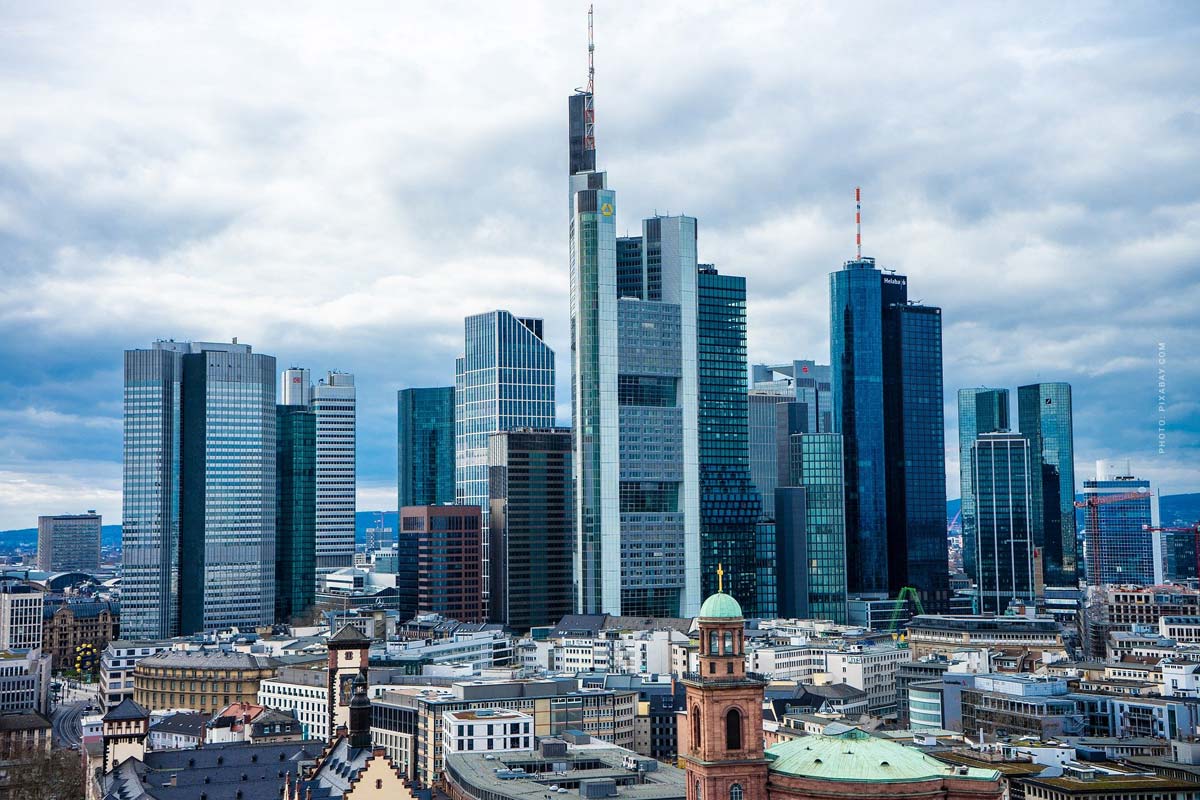
For E.ON, GRAFT develops modular charging stations that can be integrated into a wide variety of environments — from the Frankfurt skyline between skyscrapers and banks, through motorway service stations, to rural gas stations. Instead of monotonous steel boxes, a design system is created that combines branding, function, and user experience.
Investment Relevance: Owners of commercial and mixed-use real estate benefit twice — charging infrastructure enhances locations, generates secondary revenues (retail, gastronomy) and increases tenant retention. More on this: Real Estate Frankfurt.
Volocopter: Vertiports for Flying Taxis
GRAFT has won the international competition for the design of Volocopter vertiports — the landing and takeoff platforms for the first commercial flying taxis. The concepts include:
- High-rise Ports: integrated on the roofs of existing office towers (e.g. Frankfurt)
- Ground Ports: ground-level stations at train stations and airports
- Floating Ports: floating platforms in port cities like <a href="https://lukinski.de/deutschland/hamburg/" data-type="
You might also like
Sell a villa in Düsseldorf: Prices, real estate agent, checklist + buyer waiting list

Sell villa in Meerbusch: Sought-after villa location near Düsseldorf
Sell a villa in Düsseldorf: Prices, real estate agent, checklist + buyer waiting list
Sell a villa in Berlin: List, Rating, Prices, Real Estate Agent, Mistakes, Experiences

Apartment building Buy yes / no?! The fastest Rating in the world (also works for apartments)

Buying profile: Cologne, Düsseldorf (NRW), Berlin & Munich - Apartment & Apartment building
Discover more LukinskiLukinski Rating Germany: Investment Property - City List
 SellingSelling a villa Broker commission: How high?
 BuyingBuying a villa in Munich: Living & Investment…
 RealReal estate holding: box privilege and only 1.54%…
 RealReal Estate Statistics: House, Apartment, Investment & Real…
 BuyBuy a villa in Berlin: Villas as an…
 RealReal estate as a capital investment in Berlin:…
 55 real estate location tips for cafés: Scale…
 BuyingBuying a villa in Hamburg: Luxury real estate…
 BuyingBuying a villa in Düsseldorf: First-class property -…Readers also enjoyed
AI and GDPR in Germany: Why Data Protection Matters for Real Estate and Tax Questions
Townhouse Berlin: Modern townhouses to buy & rent
![Buy a townhouse in Berlin-Mitte: Luxury on 5 floors [also suitable for embassy / company headquarters]](https://lukinski.com/wp-content/uploads/2025/08/townhouse-berlin-mitte-stadt-kaufen-5-etagen-luxus-regierungsviertel-art-kunst-marmor-interior.jpg)
Buy a townhouse in Berlin-Mitte: Luxury on 5 floors [also suitable for embassy / company headquarters]
Plot of land by the water in Berlin: KP 90 Mio. - Luxury residential development in Germany's capital city