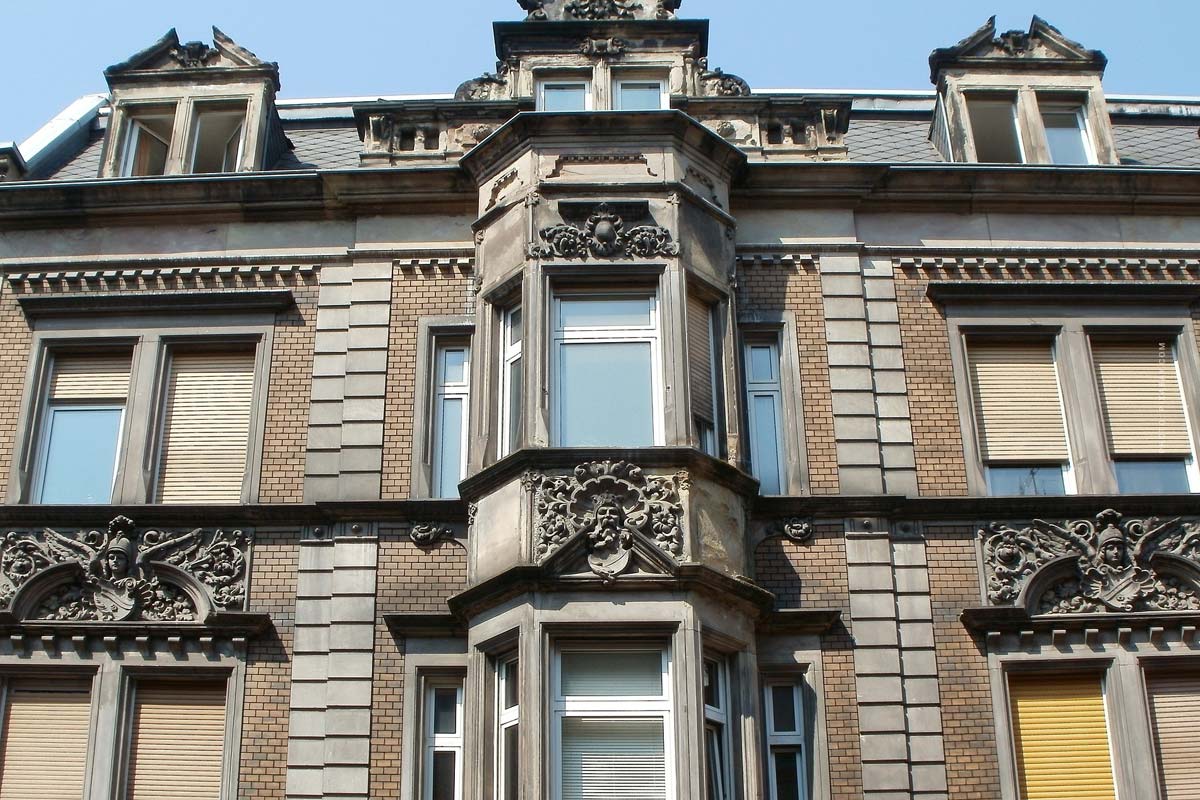
Sell property Elsdorf: Apartment building, Apartment & Plot
Anyone wanting to sell a property in Elsdorf faces a market situation fundamentally different from Cologne or Düsseldorf — and that is both an opportunity and a risk. The town in the Rhein-Erft district benefits from the structural transformation of the Rhenish mining region, which is channelling billions into the region via the Structural Strengthening Act, while at the same time micro-locations near the opencast mine remain value-sensitive. This guide shows how, as the owner of an apartment, an apartment building or a plot of land, you can determine the realistic market value, what tax burden to expect under speculation tax §23 EStG, and why property valuation here absolutely must work with a local comparison dataset.
Elsdorf market: price level, buyer profile and structural transformation
Elsdorf is located around 30 km west of Cologne and has for years been a classic commuter location: lower prices per square metre than in Cologne or Pulheim, plus growing commercial areas and a noticeable uplift from the phasing-out of the Hambach lignite opencast mine. Typical buyers are young families from the Cologne commuter belt, regional capital investors and, increasingly, investors betting on the structural-transformation lever.
Current price ranges in Elsdorf
- Existing condominium: approx. €2,200–2,800/m² depending on year of construction and energy standard
- New-build condominium: approx. €3,400–4,200/m² in central locations and districts such as Heppendorf
- Single-family house: typical selling price €350,000–520,000 depending on plot and condition
- Apartment building: purchase price factor between 16 and 20 (clearly below the Cologne level of 25–32)
- Building-ready plot: approx. €220–340/m² standard land value in residential locations
- Commercial plot: €80–150/m² in the expanded commercial areas
The structural-transformation lever: which projects actually move the market
Anyone selling in Elsdorf should know the major regional projects — they are the most important selling point for out-of-area investors:
- Hambacher See: over the coming decades, one of Germany’s largest inland lakes will emerge from the remaining pit of the opencast mine — with a direct effect on the residential and leisure value of the western districts
- A4 motorway connection & public transport expansion: improves commuting quality to Cologne/Aachen, increases appeal for families from the Cologne commuter belt
- Silvergreen Elsdorf business park: the settlement of logistics and tech companies brings jobs and rental demand
- Rhenish mining region real-world lab: funding from the Structural Strengthening Act flows specifically into district development
- BioökonomieREVIER research institute: qualified newcomer demand for high-quality condominium stock
District comparison: where Elsdorf sells best
| District / location | Residential price €/m² | Buyer type | Special feature |
|---|---|---|---|
| Elsdorf centre | 2,400–3,000 | Families, commuters | S-Bahn connection via Horrem |
| Heppendorf | 2,800–3,500 | Buyers with ties to Cologne | New-build areas, village character |
| Berrendorf/Niederembt | 2,000–2,500 | Owner-occupiers, regional | Close to nature, quiet residential areas |
| Locations near the opencast mine | 1,800–2,300 | Investors, risk-tolerant | Check mining damage disclosure |
| Esch / Grouven | 2,100–2,600 | Owner-occupiers, mixed | Village character, good B477 connection |
Anyone selling in Elsdorf is not selling a town — they are selling a micro-location. There is a difference of €800/m² between Heppendorf and Berrendorf. A blanket valuation either gives away sale proceeds or wastes marketing time.
Buyer profile in detail: who actually buys in Elsdorf?
- Young families from western Cologne (approx. 45% of buyers): budget €380,000–600,000, focus on single-family/terraced houses, financing via Sparkasse Köln/Bonn or Kreissparkasse Köln
- Regional capital investors (approx. 25%): buy apartment buildings up to factor 18, often financed via VR-Bank Rhein-Erft or Volksbank Erft
- Out-of-area investors (approx. 15%): structural-transformation speculation, properties from €1 million, often family offices
- First-time owner-occupiers from Elsdorf (approx. 10%): looking for existing housing, budget under €280,000
- Communities of heirs buying internally (approx. 5%): paying out co-heirs with a market value appraisal

Mining damage & proximity to the opencast mine: Elsdorf’s specific risk
No guide to Elsdorf is complete without the topic of mining damage. The Hambach opencast mine borders directly on districts such as Berrendorf, Niederembt and Tollhausen — subsidence, cracks and changes in groundwater are real value factors. Sellers have a duty of disclosure; concealment can make the purchase contract contestable.
Obtaining mining damage information — how it works
- Responsible body: RWE Power AG (for Hambach), plus the Arnsberg district government / Mining and Energy department in NRW
- Costs: a simple enquiry is usually free, a qualified mining damage certificate costs €50–250
- Processing time: 4–8 weeks — request early, before marketing starts
- Mining damage waiver: included in many old purchase contracts — check whether it transfers to the new buyer
- Price discount for documented damage: typically 8–15% depending on severity
- Insurability: mining damage risk is usually NOT covered by residential building insurance — a separate note in the listing is required
Insider tip: a “clean” mining damage disclosure obtained in advance is worth its weight in gold in the sales listing. It shortens negotiations by weeks and prevents last-minute price deductions.
Determining the sale price: which valuation method fits?
The most common mistake in Elsdorf is a purely online valuation via portals that work with Cologne data. For a realistic result, the method must fit the type of property — and work with local comparison values from the Rhein-Erft district. The official data basis is provided by the Rhein-Erft district expert committee (Gutachterausschuss) or the BORIS NRW portal (standard land values) and the land market report.
Comparative value method — for apartments and terraced houses
The comparative value method is the standard in Elsdorf for condominiums and standardised single-family houses. Requirement: sufficient comparable properties from the last 12–24 months in the same district. In Heppendorf and Elsdorf centre the data basis is solid; in the smaller districts it becomes thin — then the Rhein-Erft district expert committee must be consulted, which provides a qualified assessment for a fee (approx. €250–600).
Income capitalisation method — for apartment buildings
For an apartment building, what counts is not the construction condition but the cash flow. The income capitalisation method capitalises the sustainable annual net rent using the local property interest rate (typically 4.0–5.0% for apartment buildings in Elsdorf).
Example calculation, apartment building Elsdorf: rental yield and factor
| Item | Value |
|---|---|
| Total living area (8 units) | 520 m² |
| Average net cold rent | €8.20/m² |
| Annual net cold rent | €51,168 |
| Sale price at factor 18 | €921,024 |
| Gross rental yield | 5.56% |
| Operating costs (approx. 22%) | −€11,257 |
| Sustainable annual net rent | €39,911 |
| Net rental yield | 4.33% |
Real value method — for special properties
For detached villas, farmsteads or owner-occupied single properties without a clear comparison, the real value method is used. Caution: in Elsdorf, this often leads to inflated values for old farm buildings — the market pays significantly less. A market adjustment via the real value factor (typically 0.7–0.9 in NRW) is mandatory.

Tax burden on sale: concrete scenarios
The tax question often decides whether a sale now or later makes sense. Central to this is the speculation period under §23 EStG. The most important rules at a glance:
- 10-year period (rented properties): sale within ten years of acquisition → capital gain fully taxable at your personal income tax rate
- Owner-occupation exception: tax-free if the property was used exclusively for own residential purposes in the year of sale and the two preceding calendar years (the “2+1 rule”)
- 3-property limit: anyone who sells more than three properties within 5 years is considered a commercial property dealer — in which case trade tax and full market value assessment also apply
- Reference date: the dates in the notarised contracts (purchase and sale) are decisive, not the change of ownership entry
- Inheritance: the deceased’s speculation period is carried over — if the deceased had already held the property for 8 years, only 2 more years are needed for tax exemption
Scenario A: apartment building in Elsdorf, sale after 8 years
| Item | Value |
|---|---|
| Acquisition costs (incl. incidental costs) | €620,000 |
| Sale price | €880,000 |
| Straight-line depreciation to date (8 years × 2% on the building share of €500,000) | €80,000 |
| Tax book value | €540,000 |
| Capital gain | €340,000 |
| Tax burden at a 42% marginal tax rate | €142,800 |
| Net proceeds before early repayment penalty | €197,200 |
Note: for new builds acquired from 1 January 2023

As Few New Dwellings as 2012: Germany's Construction Crisis at Rock Bottom

Investing 1 Million Euros: Real Estate, ETFs & the Best Strategy

Rental Prices 2026: Why Tenants in Munich, Berlin and Frankfurt Keep Paying More
Real Estate Investment 2026: Why 84 Percent of Investors Are Betting on Residential Property

Tenancy Law Reform 2026: What the New Rent Act II Means for Landlords
2.4 Million new apartments by 2030: What Germany needs now


Sell villa in Meerbusch: Sought-after villa location near Düsseldorf
Sell a villa in Berlin: List, Rating, Prices, Real Estate Agent, Mistakes, Experiences
Villa for sale Hamburg: List, Rating, Prices, Real Estate Agent, Experiences
Sell a villa in Cologne: List, Rating, Prices, Real Estate Agent, Mistakes, Experiences