
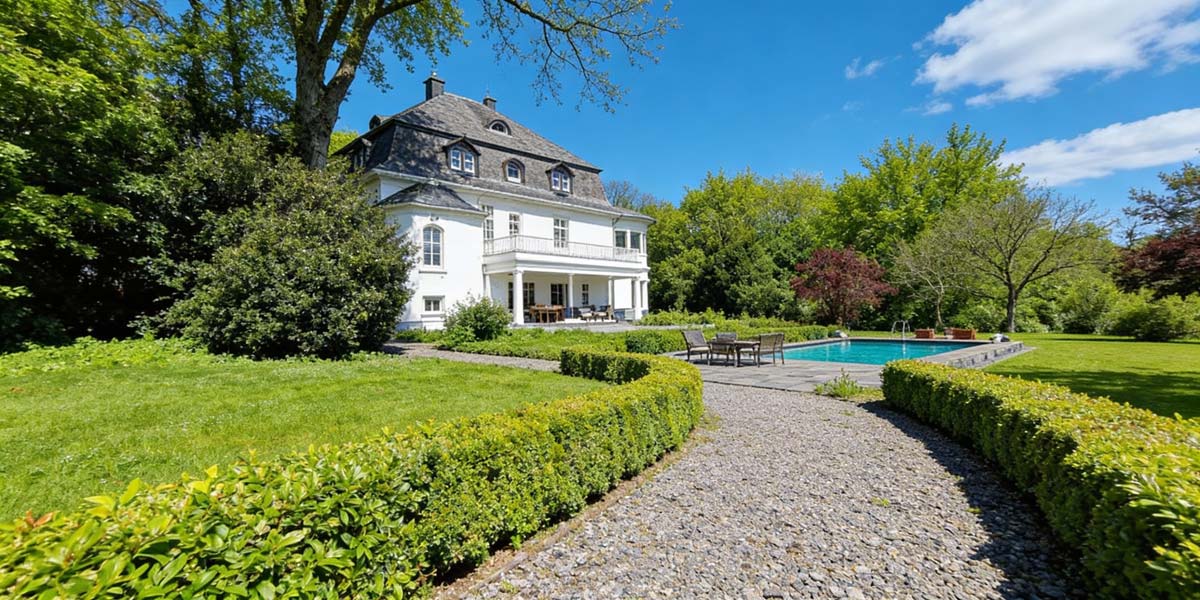
Berlin | Steglitz | Apartment building | €3,550,000 with approx. 3.73% yield
A fully let apartment building in Berlin-Steglitz for €3,550,000 with approx. 3.73% gross yield — that sounds like a solid existing property, but for every serious investor it raises the same questions: is the purchase price factor right for the location? How does this property as a capital investment compare to Mitte or Charlottenburg? And what rent dynamics really lie behind the existing rent? This article classifies Steglitz as an investment location, checks the yield figure and shows where the real value lever lies.
Steglitz in the investor profile: why calm doesn’t mean boring
Steglitz — formally part of the Steglitz-Zehlendorf district in Berlin’s south-west — is one of those neighbourhoods that often takes a back seat to Mitte, Prenzlauer Berg or Friedrichshain on the national investment radar. That is exactly the point from an investor’s perspective: lower volatility, higher tenant loyalty, lower vacancy rates.
The area around Schloßstraße, Steglitzer Damm and the residential streets towards Lichterfelde has for decades attracted a tenant profile that is ideal for long-term holders:
- Educated middle class: a high proportion of academics, Freie Universität Berlin right next door, many teachers and civil servants
- Families: grammar schools, primary schools and green spaces like Stadtpark Steglitz retain families for 10+ years
- Seniors with capital: a high proportion of long-standing tenants who have held their apartment since the 1980s/90s
- Commuters: the S-Bahn ring, U9 and the A103 motorway feeder ensure stable working professionals
- Students: close to the FU and HTW, but without the shared-flat wear and tear of Neukölln
Micro-location: which addresses carry the yield
Within Steglitz there are clear price tiers. The top locations lie between Bismarckstraße, Grunewaldstraße and the border with Dahlem. Mid-range locations are found around Steglitz North and towards Friedenau. The lower price brackets are areas near the urban motorway and commercially dominated side streets.
Typical building substance
Steglitz is an old-building district with a high proportion of Wilhelminian-era and 1920s stock, supplemented by 1950s reconstruction and isolated new-build pockets. For investors, this means: solid substance, but often a renovation backlog in pipework, roofs and façades — points that must be factored into the calculation for the apartment building valuation.

Steglitz price level: what €/m² really tells you
The following table places the investment property in the Berlin district comparison. What matters is not the headline price per square metre for condominiums, but the price per square metre for existing, rented apartment buildings.
| Berlin district | Apartment building €/m² (existing) | Purchase price factor | Net rent €/m² |
|---|---|---|---|
| Mitte / Prenzlauer Berg | €5,500–7,500 | 28–34 | €14–18 |
| Charlottenburg | €5,000–6,800 | 26–32 | €13–16 |
| Steglitz | €4,500–6,500 | 22–28 | €12–16 |
| Neukölln | €4,200–5,800 | 24–30 | €11–14 |
| Marzahn / Hellersdorf | €2,200–3,200 | 18–22 | €8–10 |
Classification in the district comparison
Steglitz thus sits in the upper mid-range — cheaper than Mitte, but with comparable tenant stability. This exact combination makes the district attractive for defensive investors.
Why €/m² alone isn’t enough
For apartment buildings, the price per square metre is only a secondary check figure. The real valuation metric is the purchase price factor combined with rent growth potential. Two buildings with identical €/m² can differ by 30% in actual yield — depending on tenant structure, building substance and renovation status.
The 3.73% under the reality check
A gross yield of 3.73% on €3,550,000 corresponds to an annual net cold rent of around €132,400. At first glance this seems unspectacular — but it is market-standard for a Berlin A-location. What matters is the difference to the net yield after operating costs.
Rule of thumb: of a purchase price factor of 27 for an existing Berlin apartment building, typically 2.4–2.8% net yield before financing remains after management, maintenance and non-recoverable costs.
Example cash-flow calculation
| Item | Annual |
|---|---|
| Net cold rent (3.73%) | +€132,400 |
| Non-recoverable operating costs (~15%) | −€19,860 |
| Maintenance reserve (€10/m² × ~1,400 m²) | −€14,000 |
| Interest (60% LTV, 4.0%) | −€85,200 |
| Repayment (2%) | −€42,600 |
| Cash flow before tax | −€29,260 |
Even a well-calculated Steglitz property doesn’t deliver a positive cash flow in the current interest rate phase at 60% debt — the return comes from repayment, inflation protection and rent increases at tenant turnover. Anyone seeking higher cash flows should compare different equity ratios in the cash-flow calculator.
The real value lever: existing rents
Steglitz has an above-average number of tenancies running 15+ years. These rents are often 25–40% below market level. This means: the stated gross yield is a conservative floor — with natural tenant turnover, a considerable rent-increase corridor opens up, which can significantly raise the effective yield over 10 years.

Incidental purchase costs and financing in Berlin
Berlin, with a real estate transfer tax of 6.0%, is among the most expensive German states. On the purchase price of €3,550,000, this alone amounts to €213,000 in transfer tax.
Breakdown of acquisition incidental costs
- Real estate transfer tax Berlin: 6.0% = €213,000
- Notary & land registry: approx. 1.5–2.0% = €53,000–71,000 (see notary costs calculator)
- Estate agent fee: depends on the mandate, often 3.57% gross on the buyer’s side
- Valuation report / due diligence: €5,000–15,000
- Total incidental purchase costs: typically 8–12% — calculate exactly in the incidental purchase costs calculator
Financing structure and the bank’s perspective
Investors should conservatively estimate the equity requirement at incidental costs plus 30–40% of the purchase price in order to structure a viable property financing. Berlin banks often internally value apartment buildings 5–10% below the market value appraisal — this additionally reduces the financeable loan-to-value.
Repayment and term strategy
For long-term holders with a long-term investment horizon, an initial repayment rate of 1.5–2.5% with at least 10 years of fixed interest is recommended. Anyone keeping an eye on the speculation period should link the fixed-rate term to the planned holding period — a forward loan can cushion the interest rate shock upon later refinancing.

Checklist: due diligence before purchase
Before placing a bid in Steglitz, the following points should be checked:
- ☐ Rent index comparison: are existing rents below the local comparable rent? How much potential for increase?
- ☐ Tenant structure: age distribution, contract terms, staggered/index-linked leases
- ☐ Renovation backlog: roof, façade, pipework, heating, windows — remaining useful life documented?
- ☐ Energy certificate: efficiency class, upcoming GEG obligations
- ☐ Milieu protection/conversion ban: is the building located in a social preservation area?
- ☐ Land registry: encumbrances, rights of way, rights of residence, contaminated sites in the building register
- ☐ Valuation method: income capitalisation method as the primary method for apartment buildings
- ☐ Exit scenario: speculation period and tax holding period considered
Tax perspective: hold or sell
As described in the guide to real estate speculation tax, the 10-year period under §23 EStG applies to rented properties. Anyone selling a Steglitz apartment building within this period pays tax on the capital gain at their personal income tax rate — for a top-rate investor, 42–45% plus solidarity surcharge.
Value development scenario
Steglitz has shown more moderate but more stable value development than the inner-city districts over recent market cycles. Assuming an annual value increase of 2%, the market value after 10 years would be around €4.33m — plus a repayment gain of around €426,000. The effective return on equity is thus significantly above the stated gross yield.
Inheritance and generational transfer
For family offices and wealthy private investors, a Steglitz apartment building is classic generational capital. Inheritance tax on real estate allows for allowances of €400,000 per child every 10 years — through early gifting, the tax burden on a €3.55m property can be significantly reduced.
Depreciation and ongoing tax burden
The straight-line depreciation rate for existing buildings is 2% p.a. on the building share. With a realistic building share of 75%, this results in an annual depreciation of around €53,250 — this noticeably reduces the taxable rental surplus and can even turn the after-tax cash flow positive, even though it is negative before tax.
Comparison with other asset classes
A gross yield of 3.73% doesn’t seem spectacular in direct comparison to government bonds or fixed-term deposits — its strength lies in the leverage and inflation protection. Anyone comparing different options should use the yield comparison with built-in inflation and tax effects.
The alternatives side by side
- 10-year government bond: nominally safe, often negative in real terms after inflation
- DAX ETF: historically ~7% p.a., but volatile and without leverage
- Apartment building Berlin Steglitz: 2.4–2.8% net + repayment + value appreciation + inflation protection
- Apartment building in a B-city: 4.5–6.0% gross, but higher vacancy risk
- Open-ended real estate funds: 1.5–2.5%, but limited liquidity
Why leverage makes the difference
The decisive difference between an apartment building and liquid asset classes is bank financing at real-asset conditions. With 60% debt, the investor works with the bank’s money — the value appreciation applies in full to their own equity. A 2% increase in market value corresponds, with this leverage, to around 5% return on equity, without a single cent of rent flowing in.
Marketing specifics in Steglitz
Anyone wanting to buy or sell an apartment building in Steglitz should know the particularities of the buyer and seller structure. The marketing period for well laid-out yield properties is often under 90 days, because an established pool of family offices, foundations and long-term holders actively acquires them.
Buyer and marketing structure
- Buyer profile: Berlin long-term holders, southern German family offices, international private investors
- Marketing channel: often off-market — only 30–40% of transactions run publicly
- Price indication: factor-based (22–28x annual net cold rent), not €/m²
- Negotiating room: 3–7% below the asking price with clean due diligence arguments
- Closing period: 8–14 weeks with structured buyers
Insider perspective: off-market as the standard
In Steglitz, a considerable proportion of apartment building transactions are never publicly offered. Sellers value discretion, established tenant relationships and avoiding speculation about the building. Anyone searching without local network connections only sees the significantly smaller public market — and tends to pay the higher factors there, because the truly interesting properties change hands directly between long-term holders and family offices.
The seller’s side: when the off-market route pays off
For owners, a discreet sale is particularly attractive when tenancies should remain intact, the managing agent must not signal a change, or tax constellations require a clearly defined circle of buyers. The typical off-market premium is not in the price

Influencer Marketing: Creativity Meets Strategy – Join CM Creator

Real Estate Depreciation (AfA): Calculation, Rates & Example
Property GmbH 2026: Does a Limited Company Pay Off for Real Estate Investors?

Real Estate AI GDPR-compliant: Privacy Policy, standard land values & rental law for investors
Land Register: Structure, Sections & Key Entries Explained

Self-Occupancy Termination: Requirements, Deadlines & Tenant Rights


Berlin | Kreuzberg | Apartment building | 5,000,000 € with approx. 3.81% return

I Ordered Cannabis Online! #GameChanger - My Experience with CannaZen

Company fruit! Vitamins! Power! Small recommendation & a healthy idea for your office

Real Estate Software to Create Yourself: ChatGPT Example Link Structure Investment