
Berlin | Köpenick | Apartment Building | 2,500,000 € with approx. 4.68% Yield
A fully let apartment building in Berlin-Köpenick for €2.5 million with a 4.68% gross yield — at first glance a classic Berlin yield deal, on closer inspection a lesson in micro-location, preservation statutes (Milieuschutz), and purchase price multipliers. Anyone wanting to seriously classify this figure should compare it against the Berlin market average using a gross yield calculator, calculate the purchase price multiplier, and factor in the Berlin purchase ancillary costs (6% real estate transfer tax) at the same time. That’s exactly what we do on this page — in relation to this specific property and the Köpenick micro-location.
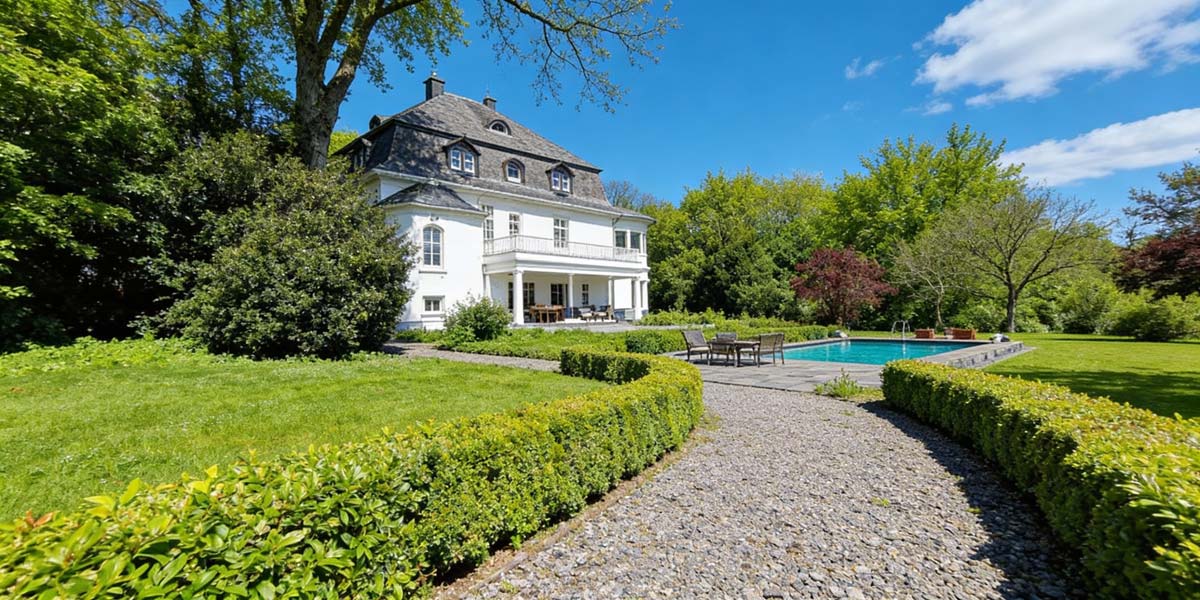
The Property at a Glance: Apartment Building Köpenick, €2.5 Million
The offered purchase price of €2,500,000 with a gross yield of 4.68% implies an annual net cold rent of around €117,000 — corresponding to a purchase price multiplier of roughly 21.4. Across Berlin’s overall average for existing apartment buildings, this multiplier currently ranges between 22 and 28, and in prime locations like Prenzlauer Berg or Mitte even 28–34. The property therefore sits at the lower — that is, investor-friendly — end of the corridor.
- City: Berlin
- District: Köpenick (Treptow-Köpenick borough)
- Property type: apartment building, fully let
- Purchase price (approx.): €2,500,000
- Gross yield (approx.): 4.68%
- Implied purchase price multiplier: approx. 21.4
- Implied annual net cold rent: approx. €117,000
Rule of thumb: a purchase price multiplier below 22 in Berlin signals substance value or micro-location risk — usually both. In Köpenick it’s mainly the former, combined with preservation-statute restrictions.

Köpenick Micro-Location: Water, Forest — and Berlin’s Quietest Boom District
At around 128 km², Köpenick is Berlin’s largest district by area and, at the same time, its greenest — over 70% of its area is forest, water, or green space. Lake Müggelsee, the Dahme, the Spree, and the historic old town of Köpenick shape a buyer profile that is unique in this combination within Berlin: families, commuters to Adlershof (a science hub) and, for a few years now, also employees of Tesla suppliers from Grünheide.
Price Level in Köpenick Compared to Berlin
Investors entering Köpenick buy more cheaply than in the inner-city ring — but forgo the per-square-meter hype of Mitte or Friedrichshain. The ranges vary considerably depending on location (Altstadt, Friedrichshagen, Adlershof, Grünau):
| Location | Purchase price MFH (€/m²) | Net cold rent (€/m²) | Purchase price multiplier |
|---|---|---|---|
| Berlin-Mitte | 5,800–8,500 | 14–19 | 28–34 |
| Prenzlauer Berg | 5,500–7,800 | 13–17 | 27–32 |
| Köpenick (Altstadt/Friedrichshagen) | 4,200–5,500 | 12–15 | 22–26 |
| Köpenick (Adlershof/Grünau) | 3,800–4,800 | 11–13 | 21–24 |
| Marzahn-Hellersdorf | 2,800–3,600 | 9–11 | 20–24 |
Typical Properties in Köpenick
The existing stock ranges from high-priced waterfront plots to prefabricated (Plattenbau) housing — the range of property types is broader here than in any other Berlin district. What’s relevant for investors above all is the mid-tier segment of 6-to-12-unit buildings:
- Wilhelminian-era buildings: mainly around Köpenick’s old town and Friedrichshagen — high renovation need, heritage protection common
- 1920s/30s apartment buildings: typical 6–12-unit buildings, the core segment for investors
- Prefabricated housing stock: in the Allende quarter and Salvador-Allende-Straße — favorable multipliers, but heavily regulated rents
- Waterfront plots: in Grünau, Müggelheim, Friedrichshagen — connoisseur properties with significantly higher €/m²
- New-build quarters: Adlershof and Wendenschloss — mostly as condominiums, rarely as an entire apartment building
Buyer Profile and Rentability
The tenant structure in Köpenick is above-average stable compared to the Berlin norm. Families with long-standing tenancies dominate — this lowers rent-loss risk but at the same time reduces the dynamics of rent-index adjustment. Anyone calculating value appreciation via rent increases should factor this in.
Yield Calculation: What’s Left of 4.68% Net?
The gross yield is a marketing figure. What matters is the cash flow after costs. We work through the property — with realistic assumptions for a fully let existing MFH in Köpenick:
Gross vs. Net: The Honest Calculation
At least five line items come off the gross rental income before even the first euro flows to the bank. The non-allocable ancillary costs are glossed over in many listings — realistic figures are as follows:
| Item | Amount p.a. | Note |
|---|---|---|
| Annual net cold rent | €117,000 | 4.68% of €2.5 million |
| – Management (approx. €25/unit/month × 10 units) | – €3,000 | market standard Berlin |
| – Maintenance reserve (approx. €12/m²) | – €9,600 | at approx. 800 m² living space |
| – Rent-loss allowance (2%) | – €2,340 | conservative |
| – Non-allocable ancillary costs | – €4,500 | caretaker, insurance, etc. |
| Net income (before financing) | €97,560 | Net yield approx. 3.9% |
Cash Flow After Financing
At 75% loan-to-value (€1,875,000), 4.0% interest and 2.0% amortization, debt service comes to around €112,500 per year — exceeding the net income of €97,560. Ongoing cash flow is therefore negative; the gain lies in the amortization portion and expected value appreciation. Anyone wanting to check the details should use the net yield calculator and the cash flow calculator with their own financing assumptions — this is the point where many buyers set up their calculation incorrectly.


Berlin Purchase Ancillary Costs: 9–11% on Top
At 6%, Berlin has one of the highest real estate transfer tax rates in Germany. At a €2.5 million purchase price, that alone amounts to €150,000 in transfer tax. Add notary, land registry, and any broker’s commission, and the acquisition ancillary cost block quickly adds up to €250,000 and more.
Breakdown of Acquisition Ancillary Costs
Unlike the purchase sum itself, the following items must be fully covered from equity. Banks practically never finance ancillary costs:
- Berlin real estate transfer tax: 6.0% = €150,000 — details in the guide real estate transfer tax
- Notary & land registry: approx. 1.5–2.0% = €37,500–50,000 — see calculating notary fees
- Broker’s commission (if applicable): 3.57% incl. VAT (split) = up to €89,250 — see calculating broker’s commission
- Due diligence / appraisals: €5,000–15,000 depending on depth
- Total equity requirement: at least ancillary costs + 20% equity ≈ €750,000 — details in the equity calculator
Tax Capitalization of Ancillary Costs
Real estate transfer tax, notary, and broker costs count as acquisition ancillary costs and are depreciated over the building’s AfA (depreciation) schedule — not immediately deductible as income-related expenses. This is a common misconception among first-time investors.
Insider Topic: Preservation Statutes in Köpenick — Risk and Opportunity
In recent years, Köpenick has enacted several social preservation statutes under §172 of the German Building Code (BauGB) — including in Friedrichshagen-Nord and parts of the old town. What this means: modernizations that lead to rent increases above the customary local level require approval. The conversion into condominium ownership — the classic investor exit via WEG formation and individual sale — is also subject to approval and is often rejected.
Anyone buying an apartment building in a Berlin preservation area is buying a 10-year holding-period cash flow — not a subdivision speculation. This is the main reason why multipliers in Köpenick run 5–8 points below Mitte.
Whether the specific property lies within a preservation area is therefore the most important point of due diligence — more important than the energy certificate. It is not stated in the listing. It is held at the Treptow-Köpenick district office, urban development department.
Valuation of the Property: Is 4.68% Fair?
For a fully let existing MFH in Köpenick outside a preservation area, 4.68% gross yield is market-appropriate to slightly attractive. If the property lies within a preservation area, the yield is more of a compensation premium for the regulatory brake — in which case there’s room to negotiate the price down.
Three Valuation Methods for Verification
A sound purchase decision never relies on a single method. The average of two independent methods is the resilient basis for negotiation:
- Income approach: the standard for yield properties — details in the income approach
- Cost approach: as a control calculation via land and building replacement value — see cost approach
- Comparable-value approach: via standard land values and €/m² comparisons — see comparable-value approach
- Overall apartment building valuation: a compact guide in the article valuing an apartment building
- Berlin market situation: classification within the overall market under buying real estate market situation
Plausibility Check via Standard Land Value
As described in the guide buying an apartment building, valuation should always be done using two independent methods — the average is the resilient basis for negotiation. In Köpenick, standard land values range between €600 and €1,800/m² depending on location. For a 1,000 m² plot, that quickly amounts to €600,000 in pure land value — the rest of the purchase price is building value and income yield.
Checklist: Due Diligence for an MFH in Köpenick
Work through these points before making a notarial offer — in this order:
- ☐ Is the property located in a preservation area? (district office inquiry)
- ☐ Check tenant list with contract start date, cold rent, and rent-index difference
- ☐ Rent-index compliance of each unit (Berlin rent index)
- ☐ Energy certificate and maintenance backlog (observe GEG requirements)
- ☐ Land registry excerpt: encumbrances, rights of way, hereditary building right?
- ☐ Declaration of division (if already subdivided)
- ☐ Last 3 operating cost statements — plausibility of non-allocable costs
- ☐ Check maintenance history and reserve balance — see maintenance reserve
- ☐ Calibrate Köpenick standard land value against the purchase price
- ☐ Bank financing confirmation before the notary appointment — see real estate financing
Tax Perspective: Hold or Sell?
For an MFH as a capital investment, the 10-year speculation period under §23 EStG applies. Anyone selling within this period pays tax on the profit at their personal income tax rate — for top earners, that’s quickly 42–45%. From year 11 onward, the capital gain is tax-free for private individuals.
Depreciation, Speculation Period, and Exit Strategy
Annual depreciation is, alongside amortization, the second major lever of tax optimization. For Köpenick pre-war buildings, it’s almost always worth checking for heritage depreciation:
- Speculation period: 10 years from notarization — details under calculating the speculation period
- Standard depreciation: 2% straight-line over 50 years on the building portion
- Heritage depreciation: special depreciation possible for heritage-protected Köpenick pre-war buildings
- Speculation tax amount: exact calculation in the speculation tax calculator
- Strategy: buy-and-hold dominates in Köpenick due to preservation statutes and a tax-free exit after 10 years
GmbH Structuring as an Alternative
For purchase prices from €2 million upward, it’s worth examining an asset-managing GmbH (so-called real estate GmbH). Advantage: ongoing rental income is taxed at approx. 15.8% instead of 42%. Disadvantage: no 10-year tax exemption on sale. The decision depends on the investment horiz

Influencer Marketing: Creativity Meets Strategy – Join CM Creator

Real Estate Depreciation (AfA): Calculation, Rates & Example
Property GmbH 2026: Does a Limited Company Pay Off for Real Estate Investors?

Real Estate AI GDPR-compliant: Privacy Policy, standard land values & rental law for investors
Land Register: Structure, Sections & Key Entries Explained

Self-Occupancy Termination: Requirements, Deadlines & Tenant Rights


Berlin | Kreuzberg | Apartment building | 5,000,000 € with approx. 3.81% return

I Ordered Cannabis Online! #GameChanger - My Experience with CannaZen

Company fruit! Vitamins! Power! Small recommendation & a healthy idea for your office

Real Estate Software to Create Yourself: ChatGPT Example Link Structure Investment