
Berlin | Mitte | Apartment building | €4,400,000 with approx. 3.5% yield
An apartment building in Berlin-Mitte for 4.4 million euros with a 3.5% gross yield — at first glance, the factor of around 29 seems ambitious, but anyone who knows the market knows: in this location, you’re not buying a cash-flow machine, but a three-stage equity story made up of rent growth, the depreciation tax lever and value appreciation. What this property as a capital investment really means, what micro-location logic lies behind it, how to calculate the net yield instead of being dazzled by gross figures, and why a 30 percent tenant turnover over 10 years can raise the market value by more than €1.5 million — we explain it here. Anyone wanting to buy an apartment building should understand Mitte before placing a bid.
Berlin-Mitte: why 3.5% yield is worth a lot of money here
Berlin-Mitte is the most expensive and, at the same time, the most liquid district of the capital. Anyone buying an apartment building here pays a premium — but in return gets something the outer districts never deliver: institutional buyer demand, international tenants with high creditworthiness, and a price per square metre that has historically risen more stably than the Berlin average.
The average gross yield for apartment buildings in Mitte is between 2.8% and 3.8%. A purchase price factor of around 29 (€4.4m at around €154,000 annual net cold rent) is market-appropriate for the location — in B- and C-locations the same factor would be considered overpriced, in Mitte it is normal.
In Mitte, you’re not buying today’s rent index, but the rent development of the next 15 years. Anyone optimising for cash flow here has chosen the wrong location.
What makes Mitte unique as a micro-location
- Centrality: Brandenburg Gate, government district, Museum Island, Hackescher Markt — all within walking distance, attracting tourism and business tenants
- International demand: embassies, corporate headquarters, NGOs ensure solvent expat tenants with rent levels above the local rent index
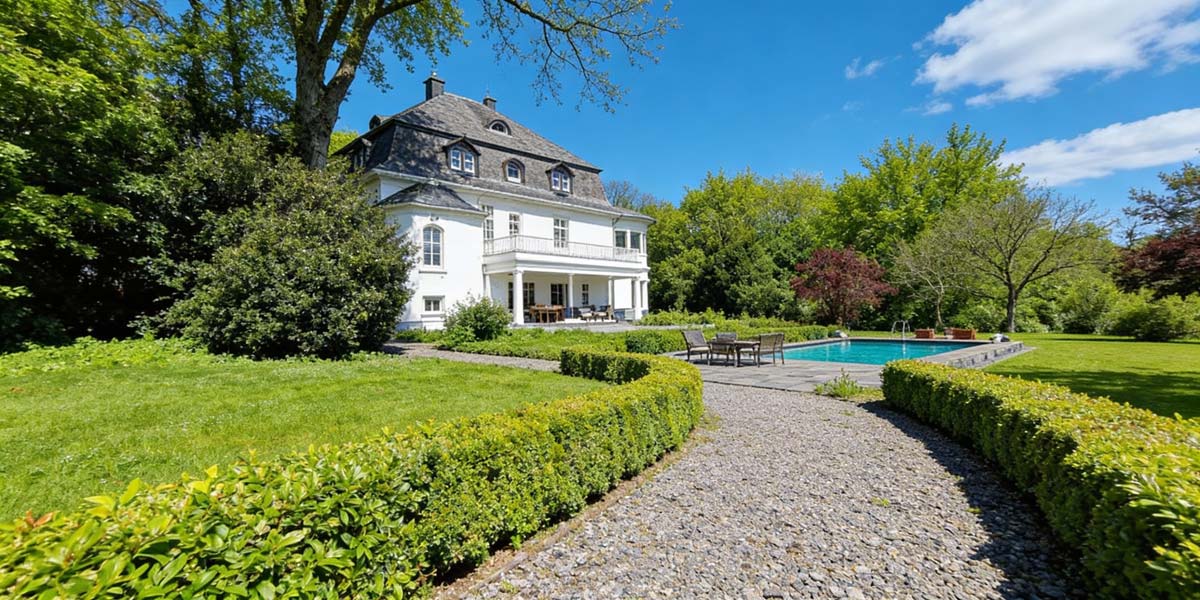
- Old-building substance: Wilhelminian-era houses with 3.50 m ceiling heights, stucco and parquet — an emotional premium factor on resale
- Scarce building land: practically no more new-build competition in the core area, keeping existing stock valuable
- Liquidity: off-market deals and institutional buyers (family offices, pension funds) provide exit security
Within the district there is a clear hierarchy. Top addresses are Auguststraße, Linienstraße, Sophienstraße, Tucholskystraße (all Spandauer Vorstadt), Reinhardtstraße and Schiffbauerdamm (near the government district). Solid B-locations with upside potential: Brunnenstraße south of Bernauer Straße, Chausseestraße towards Nordbahnhof, the eastern part of Invalidenstraße. Transitional locations with higher yield but more risk: Brunnenstraße to the north, areas near the Wedding border, Heidestraße/Europacity (new-build cluster, different market).

Price ranges and purchase price factors in Berlin-Mitte
Mitte is not just Mitte. Within the district there are significant price differences between Spandauer Vorstadt, the area around Rosenthaler Platz, Friedrichstraße and the outlying areas towards Moabit or Wedding. The following overview shows typical market values for existing, renovated apartment buildings.
| Micro-location in Mitte | Purchase price €/m² | Market rent €/m² cold | Purchase price factor |
|---|---|---|---|
| Spandauer Vorstadt / Hackescher Markt | €9,500–13,500 | €20–26 | 30–36 |
| Rosenthaler Platz / Torstraße | €8,500–11,500 | €18–23 | 28–33 |
| Government district / Friedrichstraße | €10,000–14,000 | €22–28 | 32–38 |
| Wedding border / Brunnenstraße | €6,500–8,500 | €14–18 | 26–30 |
| Moabit border / Tiergarten-North | €7,000–9,500 | €15–20 | 27–32 |
At a purchase price of €4.4m and a gross yield of 3.5%, the property arrives at a purchase price factor of around 28–29 — this points to a location with upside potential, not the absolute premium segment.
The true value of many Mitte apartment buildings lies not in today’s rent, but in the spread between existing and market rent. Buildings with long-term tenants from the 1990s or before the rental law reform often have rents of €6–9/m². Once these apartments are vacated, market rents of €18–24/m² can be achieved — a doubling to tripling of rental income per vacated flat.
- Modernisation levy: under §559 BGB, 8% of modernisation costs can be passed on to rent annually
- Cap limit: in Berlin, the maximum increase for existing leases is 15% over 3 years
- Index-linked leases: recommended for new lettings, linking rent to the consumer price index
- Rent brake: applies in Mitte — new lettings max. 10% above the local comparable rent, with exceptions for furnished flats and modernisation
Tenant turnover quantified: the 10-year scenario
Assume the property has 1,540 m² of living space at an average rent of €8.30/m². Over 10 years, 30% of existing tenants move out (natural turnover in Mitte: 4–6% p.a.). The vacated units are re-let after modernisation at €22/m²:
| Scenario | Today | After 10 years |
|---|---|---|
| Average rent €/m² | €8.30 | €12.40 |
| Annual net cold rent | €153,400 | €229,200 |
| Market value at factor 28 | €4.30m | €6.42m |
| Modernisation investment (cumulative) | — | – €0.55m |
| Net value gain | — | + €1.57m |
This calculation excludes any general market value appreciation. Add 3% p.a. general rent index growth, and the lever is considerably higher. This is why institutional buyers accept factors of 30+.
From the gross factor to real cash flow: the honest calculation
A 3.5% gross yield sounds solid — until you subtract the running costs. For an apartment building in Berlin-Mitte with old-building character, investors should assume at least 22–28% of gross rents as operating costs. The difference between gross and net yield determines whether the property is financeable.
Calculation example for a €4.4m purchase price
| Item | Amount p.a. | Note |
|---|---|---|
| Gross rental income (3.5%) | + €154,000 | assuming full occupancy |
| Non-recoverable management | – €6,000 | approx. €25/unit/month |
| Maintenance reserve | – €18,000 | €10–12/m² living space/year |
| Rent default risk (2%) | – €3,080 | typical for Mitte |
| Non-recoverable operating costs | – €4,000 | insurance, other |
| Net rental income | €122,920 | ≈ 2.79% net yield |
Financing scenarios and debt service coverage
Banks typically finance Berlin-Mitte apartment buildings of this class at 50–65% loan-to-value. The crucial bank metric is the DSCR (Debt Service Coverage Ratio): net rental income divided by debt service. Most banks reject values below 1.1; from 1.2–1.3, conditions noticeably improve.
| Scenario | 50% debt | 60% debt | 65% debt |
|---|---|---|---|
| Loan amount | €2.20m | €2.64m | €2.86m |
| Annuity (4.0% interest, 1.5% repayment) | €121,000 | €145,200 | €157,300 |
| Cash flow before tax | + €1,920 | – €22,280 | – €34,380 |
| DSCR | 1.02 | 0.85 | 0.78 |
| Equity requirement incl. incidental costs | €2.57m | €2.13m | €1.91m |
You should run through the real cash flow calculator before every bid. Negative cash flows are normal in Mitte and are more than compensated for by depreciation tax benefits, repayment gains and value appreciation — provided the equity is sufficient to bridge the gap.


The real yield driver: depreciation and the tax lever
For investors at the top tax rate (45% + solidarity surcharge), depreciation determines the effective yield. The property depreciation on the building for existing stock is 2.0% to 2.5% per year — significantly more for listed buildings or preservation statutes.
Three depreciation scenarios for a Mitte apartment building
- Standard existing stock (§7 para. 4 EStG): 2.0% p.a. straight-line, often 2.5% for buildings from before 1925 — on €4.4m at an 80% building share = €70,400–88,000 annual depreciation
- Listed-building depreciation (§7i EStG): 9% p.a. on the renovation share in the first 8 years, then 7% for 4 years — a €800,000 renovation brings an additional €72,000 depreciation per year, see listed properties
- Preservation statute / redevelopment area (§7h EStG): identical rates to listed buildings, applicable in parts of Mitte (Spandauer Vorstadt, Rosenthaler Vorstadt)
Concretely, this means: an investor at the top tax rate saves around €41,000 in tax annually through €88,000 of depreciation — that’s 0.93% additional yield on the purchase price that doesn’t appear in the gross view.
Purchase price allocation: the lever to adjust before the notary
The split between land value and building value is not arbitrary, but there is room to manoeuvre. The higher the building share, the higher the depreciation base. In Mitte, with high standard land values (often €3,000–5,500/m² of land), unfavourable splits threaten — a well-founded valuation using the comparative value method or residual value method can raise the building share from a typical 65% to 75–80%. Over a 30-year depreciation period, this results in a tax advantage in the six-figure range.
In a classic asset deal, you buy the property directly — and pay 6.0% real estate transfer tax on €4.4m, i.e. €264,000. In a share deal, you instead buy shares in a property-holding company (typically a GmbH or GmbH & Co. KG) that owns the building. If you acquire less than 90% of the shares within ten years, no real estate transfer tax is due.
- Advantage of share deal: €264,000 in tax savings, often lower notary co
You might also like
Influencer Marketing: Creativity Meets Strategy – Join CM Creator

Real Estate Depreciation (AfA): Calculation, Rates & Example
Property GmbH 2026: Does a Limited Company Pay Off for Real Estate Investors?

Real Estate AI GDPR-compliant: Privacy Policy, standard land values & rental law for investors
Land Register: Structure, Sections & Key Entries Explained

Self-Occupancy Termination: Requirements, Deadlines & Tenant Rights
Discover moreNotaryNotary Costs When Buying a House: Table, Calculation… SellSell a villa in Düsseldorf: Prices, real estate…
 InvestmentInvestment Real Estate: What You Need to Pay…BerlinBerlin | Mitte | Apartment building | 15,000,000…BerlinBerlin | Lichterfelde | Apartment building | 4,450,000…BerlinBerlin | Friedrichshain | Apartment building | 2,680,000…BerlinBerlin | Friedrichshain | Apartment building | 3,100,000…BerlinBerlin | Kreuzberg | Apartment building | 3,700,000…BerlinBerlin | Reinickendorf | Apartment building | 4,650,000…BerlinBerlin | Prenzlauer Berg | Apartment building |…Readers also enjoyed
Berlin | Kreuzberg | Apartment building | 5,000,000 € with approx. 3.81% return

I Ordered Cannabis Online! #GameChanger - My Experience with CannaZen

Company fruit! Vitamins! Power! Small recommendation & a healthy idea for your office

Real Estate Software to Create Yourself: ChatGPT Example Link Structure Investment