
The heat pump – heating with renewable energy
To heat your own four walls, there are now a variety of options — from classic gas and oil heating systems to systems that exclusively use renewable energy. At the heart of the energy transition lies the heat pump. It is not only a heating system, but a central lever for real estate: it influences the energy certificate, the rentability, the eligibility for subsidies, and thus directly the Real Estate return. What a heat pump does, what types are available, what it really costs — and when it makes sense for homeowners and investors.
Efficient heating with environmental energy — the heat pump makes it possible
The heat pump is the key technology for fulfilling the Building Energy Act (GEG), which requires new heating systems to use at least 65 % renewable energy. In addition to solar thermal energy, biomass, and hybrid solutions, the heat pump offers an almost CO₂-neutral option — provided the electricity comes from renewable sources or a private photovoltaic system.
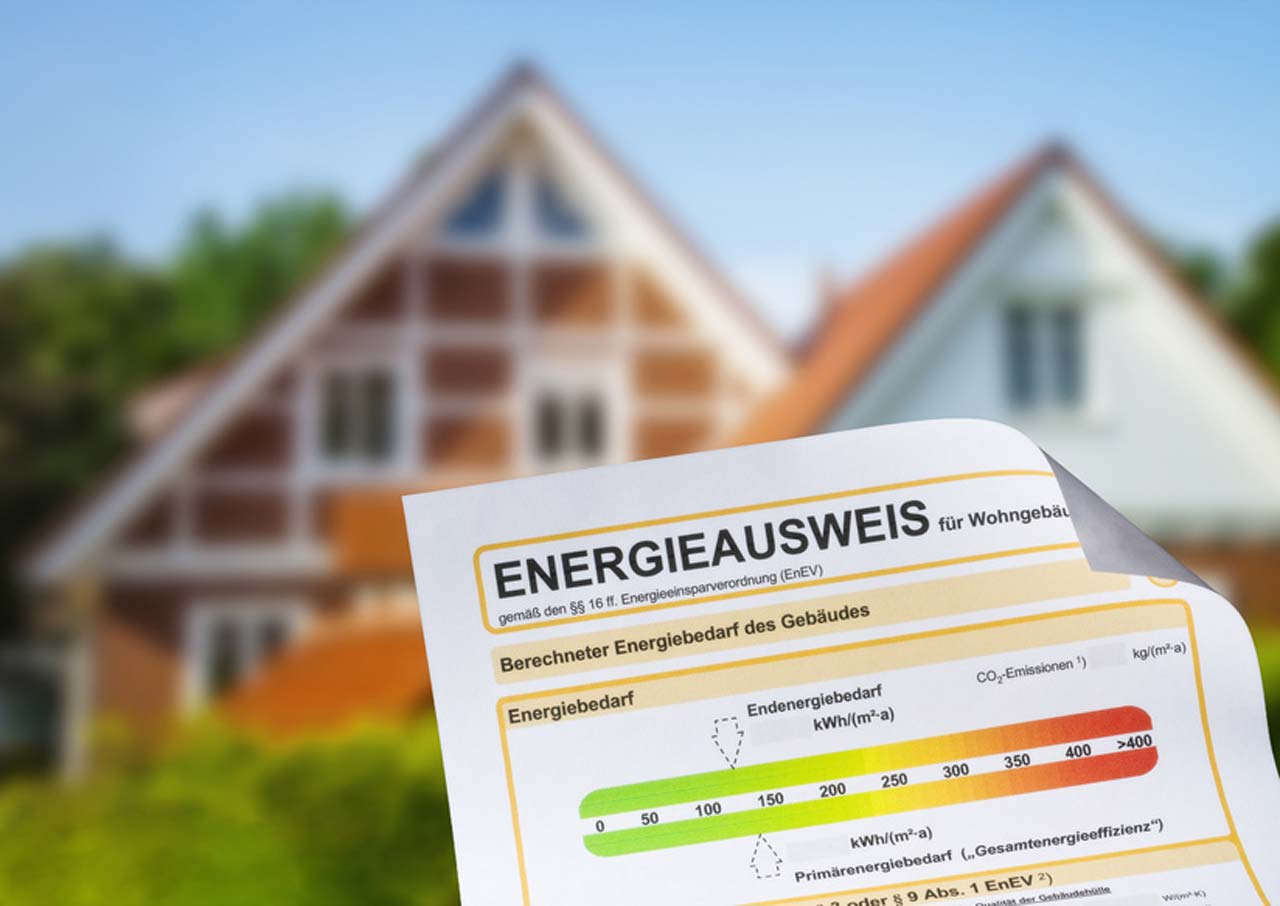
For investors, this is more than a technical detail: A modern heat pump improves the energy certificate measurably, raises the energy efficiency class, reduces additional costs for tenants, and future-proofs the property against CO₂ pricing and rising fossil fuel prices.
How it works — how the heat pump operates
The heat pump uses thermal energy that is already stored in the environment and lifts it to a usable temperature level. The principle is identical to that of a refrigerator — only reversed: instead of transporting heat from the inside to the outside, the heat pump transports heat from the outside to the inside.
The cycle in four steps:
- Vaporization: A refrigerant with a low boiling point absorbs environmental heat (air, ground, water) and evaporates.
- Compression: An electric compressor compresses the gas — the temperature rises significantly.
- Condensation: The heat is transferred via a heat exchanger to the heating system (radiators, underfloor heating, hot water tank).
- Expansion: The refrigerant expands, cools down, and the cycle starts again from the beginning.
Crucial for efficiency is the annual performance factor (APF): it indicates how much thermal energy is generated per kilowatt-hour of electricity used. An APF of 4 means: 1 kWh of electricity generates 4 kWh of heat. Systems with an APF of ≥ 3.0 (existing systems) or higher values depending on the program are generally eligible for funding under BEG.
The energy sources of the heat pump — air, earth and water compared
The heat pump uses three different energy sources. Which variant is suitable for a property depends on location, plot size, drilling permit, budget, and heating load.
| Criterium | Air-Water | Ground-Water (Earth) | Water-Water (Groundwater) |
|---|---|---|---|
| Investment (complete) | approx. 25,000–35,000 € | approx. 35,000–50,000 € | approx. 40,000–55,000 € |
| Typical COP | 3.0–4.0 | 4.0–4.8 | 4.5–5.2 |
| Permit | usually not required | Drilling permit | Water law permit |
| Space requirement | low (outside + inside) | Deep drilling or 250–400 m² area | 2 wells + safety distance |
| Weather dependent | yes (efficiency decreases in winter) | hardly | no, constant all year round |
| Noise emission | relevant (outdoor unit) | none | none |
| Suitable for | New build & renovated old building | Single-family home with plot, MFH | Special cases, high heat demand |
The Air-Water Heat Pump — Thermal Energy from the Air
The air-water heat pump is by far the most commonly installed variant — especially in the Buy a house segment and during renovations. It draws in outside air, extracts heat from it, and transfers this heat to the heating system. The system usually consists of an outdoor unit (evaporator, fan) and an indoor unit.
Advantages:
- Lowest investment costs
- No drilling, no permits
- Easy to install even retroactively
- Low space requirements
Disadvantages:
- Efficiency drops in frost — heating rod activates in emergencies (costly electricity)
- Noise: Minimum distance from the property boundary according to TA Noise regulations must be observed (often 3 m)
- Quickly uneconomical in unsanitized old buildings with high supply temperatures
Important: The outdoor unit must be kept frost-free and free of snow. Professional maintenance every one to two years maintains efficiency.
The Ground-Water Heat Pump — Energy Source Earth
Constant thermal energy is stored in the ground. The ground water heat pump uses it via a pipe system laid in the earth, in which a water antifreeze mixture (“brine”) circulates.
Two types of construction are available:
- Boreholes / Deep drilling: Drillings up to 100 m depth, approximately 50 W per meter of drilling. A single-family house requires about 150 meters of drilling, often distributed across two drillings. Special permit required, not allowed in water protection areas. Cost: approximately 60–100 € per meter of drilling.
- Flat collectors: Pipe coils at a depth of 1.2–1.5 m, approximately 25 W per m². For a modern single-family house, about 250–400 m² of land area is needed. Cost: approximately 10–25 € per m². Advantage: no drilling permit required — Disadvantage: the area may not be built on or sealed in the future.
The brine-water heat pump delivers nearly constant efficiency throughout the year and is therefore significantly more economical in operation than the air variant. The higher initial costs are amortized over the lifespan (20–25 years).
The water-water heat pump — thermal energy from groundwater
The water-to-water heat pump is the most efficient, but also the most demanding option. It operates with two wells: a supply well that transports groundwater to the heat pump, and a return well that feeds the cooled water back into the ground. The wells must be installed at a sufficient distance (usually 10–15 m) in the direction of groundwater flow.
Requirements:
- Permit from the local water authority
- Water analysis: pH value, iron, manganese, chloride content — chemically contaminated groundwater can damage the heat exchanger
- Groundwater at a maximum depth of 15–20 m (otherwise economically unattractive)
- Sufficient yield of the well
Since groundwater remains constant at 8–12 °C throughout the year, water-to-water heat pumps achieve COP values of 5.0 and more. They are therefore particularly suitable for apartment buildings and properties with high heating demand — see Buy apartment building.



Heat pump in existing buildings vs. new construction
Ein häufiger Fehler bei Investoren: Eine Wärmepumpe wird ungeprüft in einen Altbau eingebaut — und liefert dort eine schlechte Effizienz, weil die Vorlauftemperatur des Heizsystems zu hoch ist.
- New construction: Ideal. Low supply temperatures (35 °C via underfloor heating), good insulation, JAZ regularly above 4. Heat pump is today’s standard solution.
- Renovated old building: Works well if insulation (windows, roof, exterior walls) is at a modern level and large heating surfaces (low-temperature radiators, underfloor heating) are present.
- Unrenovated old building: Critical. Supply temperatures above 55 °C push the JAZ below 3, electricity costs explode. Often, an initial shell renovation is necessary here — relevant when buying your first property as a renovation project.
- Historic property: Special case. Exterior units often visually problematic, drilling frequently difficult. More information in the guide Buy historic property.
The costs of a heat pump — purchase, installation, operation
The total costs are divided into three blocks: accessing the heat source, the unit itself, and ongoing operation. Anyone who wants to include the investment in a Buy property decision should always calculate the heat pump together with subsidies — only then will the economic viability become clear.
Costs for accessing the energy source
- Air: No access costs — consider the installation space and noise protection
- Ground probes (deep drilling): 60–100 €/drilling meter, at 150 drilling meters approximately 9,000–15,000 €
- Flat collector: 10–25 €/m², at 300 m² approximately 3,000–7,500 €
- Water-Water (two wells): 6,000–10,000 € including water analysis and approval
Costs for the heat pump itself
Including buffer tank, hot water tank, hydraulics and installation:
- Air-Water Heat Pump: 15,000–25,000 €
- Ground-Water Heat Pump: 18,000–28,000 €
- Water-Water Heat Pump: 20,000–30,000 €
These amounts are included in the calculate purchase-related costs calculation if the system is co-financed as part of a renovation and can be covered through real estate financing or through favorable KfW programs.
Subsidy — up to 70 % grant by BEG/BAFA
The most important argument for investors: The federal funding for efficient buildings (BEG) covers a significant part of the costs. Eligible for funding are up to 30,000 € per residential unit (single measure heating). The bonuses are cumulative:
- Basic subsidy: 30 %
- Climate efficiency bonus (for previous heating system replacement): + 20 %
- Efficiency bonus (ground water/ water or natural refrigerant): + 5 %
- Income bonus (for owner-occupiers with ≤ 40,000 € taxable income): + 30 %
Maximum eligible for funding: 70 % of the investment costs — with a 35,000 € investment, this is actually 10,500 € own contribution. Important for investors: They usually receive only the basic funding (30 %), but can deduct the investment as advertising expenses / via depreciation.
Operating costs — example calculation
Example single-family home with 25,000 kWh heating demand:
- Air-water, JAZ 3.5: 25,000 / 3.5 = 7,143 kWh electricity × 0.30 €/kWh = ~2,143 €/year
- Ground-water, JAZ 4.5: 25,000 / 4.5 = 5,555 kWh × 0.30 €/kWh = ~1,667 €/year
- Water-water, JAZ 5.0: 25,000 / 5.0 = 5,000 kWh × 0.30 €/kWh = ~1,500 €/year
- Comparison Gas (Efficiency 95 %): 25.000 / 0.95 = 26.300 kWh × 0.12 €/kWh + CO₂ surcharge = ~3.300–3.800 €/year
With a special heat pump tariff (often 0.22–0.26 €/kWh) and your own PV system, electricity costs drop additionally by 30–50 %. The combination of heat pump + photovoltaics + battery storage is the most economical solution for many homeowners.

Effect on Property Value and Rentability
A heat pump is not just a cost factor — it is a value driver:
- Energy certificate: Jump of one to two classes possible (e.g. from D to

Income tax (ESt) simply explained: forms, basic table, wage tax & Co.
Alternative energies – making sensible use of solar energy, wind and water power
Collectors for solar systems – models, differences and the advantages & disadvantages
The big guide to photovoltaics – everything you need to know about renewable energy

Solar stand-alone system or coupling to the public grid – photovoltaic systems in comparison
Wind power plant – using renewable energy through wind








What does 5% return mean? Real estate, Capital investment, Positive 🆚 Negative cash flow

Investing in Water: Purifying, Measuring, Distributing & ETF Ideas – UN Conference in New York

Fix & Flip Strategy: Buy Real Estate, Improve and Sell – Real Estate Trading
Balcony solar power system: advantages, installation, maintenance and costs + 3 tips on Amazon.